
Metal swarf shredding
Long and tangled metal swarf can occupy a large volume and make handling, transport, storage and further processing more difficult. Shredding reduces it to a shorter, more free-flowing form that is easier to handle or is prepared for the next stage of processing.
CASTULIK designs shredding solutions for steel, stainless steel, aluminium and copper swarf. The shredder configuration is selected according to the material, swarf geometry, feeding method, required output and downstream process.

Why shred metal swarf?
Long metal swarf often has a very low bulk density and forms irregular tangles that are difficult to store, transport and feed into downstream equipment. Shredding reduces it to a shorter, more free-flowing form that is easier to handle and process.
One of the main reasons for shredding is volume reduction. In specific CASTULIK applications, shredding metal swarf has reduced its volume by up to approximately 90%. The actual result depends on the material and, above all, the geometry of the incoming swarf.
Shredding also simplifies the handling, transport and storage of swarf. Long strands can become entangled and form bulky masses, making it difficult to move the material between machine tools and the next processing stage. Once shortened, the material flows more easily and can be collected or fed into downstream equipment more efficiently.
Another reason is to prepare the swarf for downstream processing. Shredding can, for example, precede the separation of oil or cutting fluid by centrifuging, briquetting, melting or further material recovery.
Shortening long and tangled swarf can also reduce the need for manual handling of bulky masses of sharp material.
Not all swarf needs to be shredded. Shredding is particularly useful where the length and geometry of the swarf make handling, transport, storage or further processing difficult.

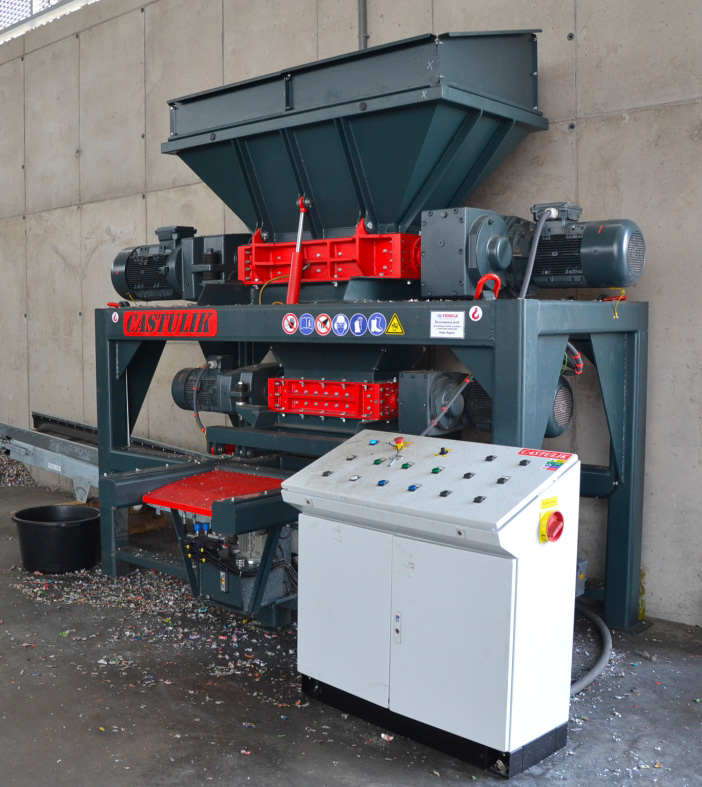
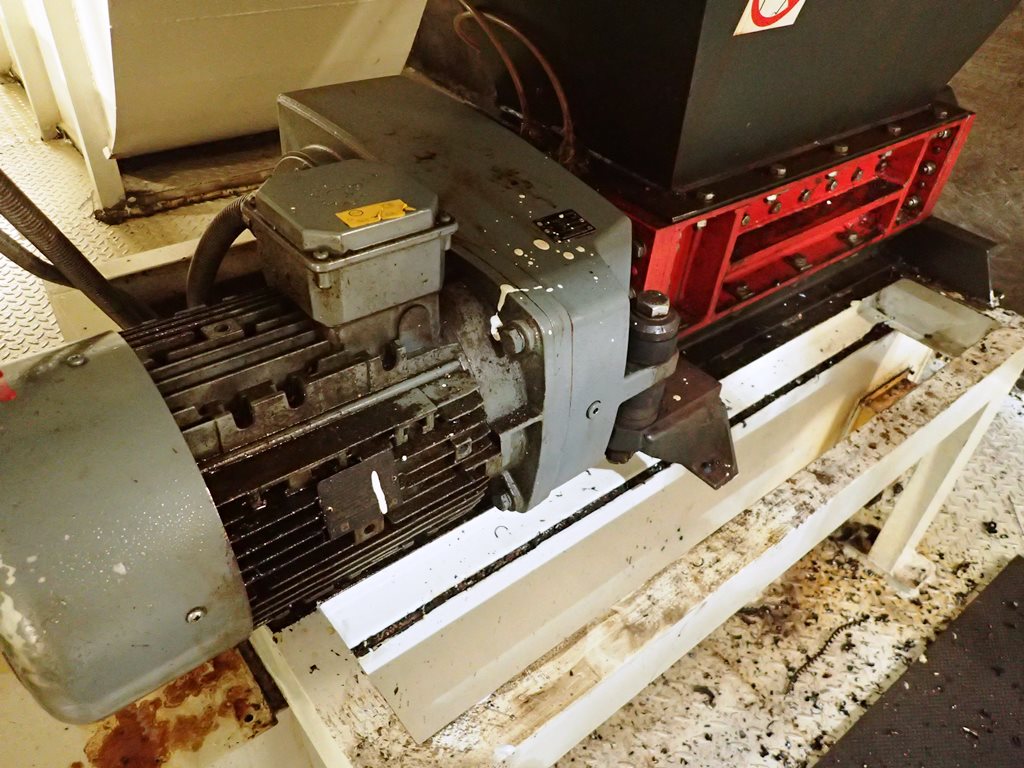
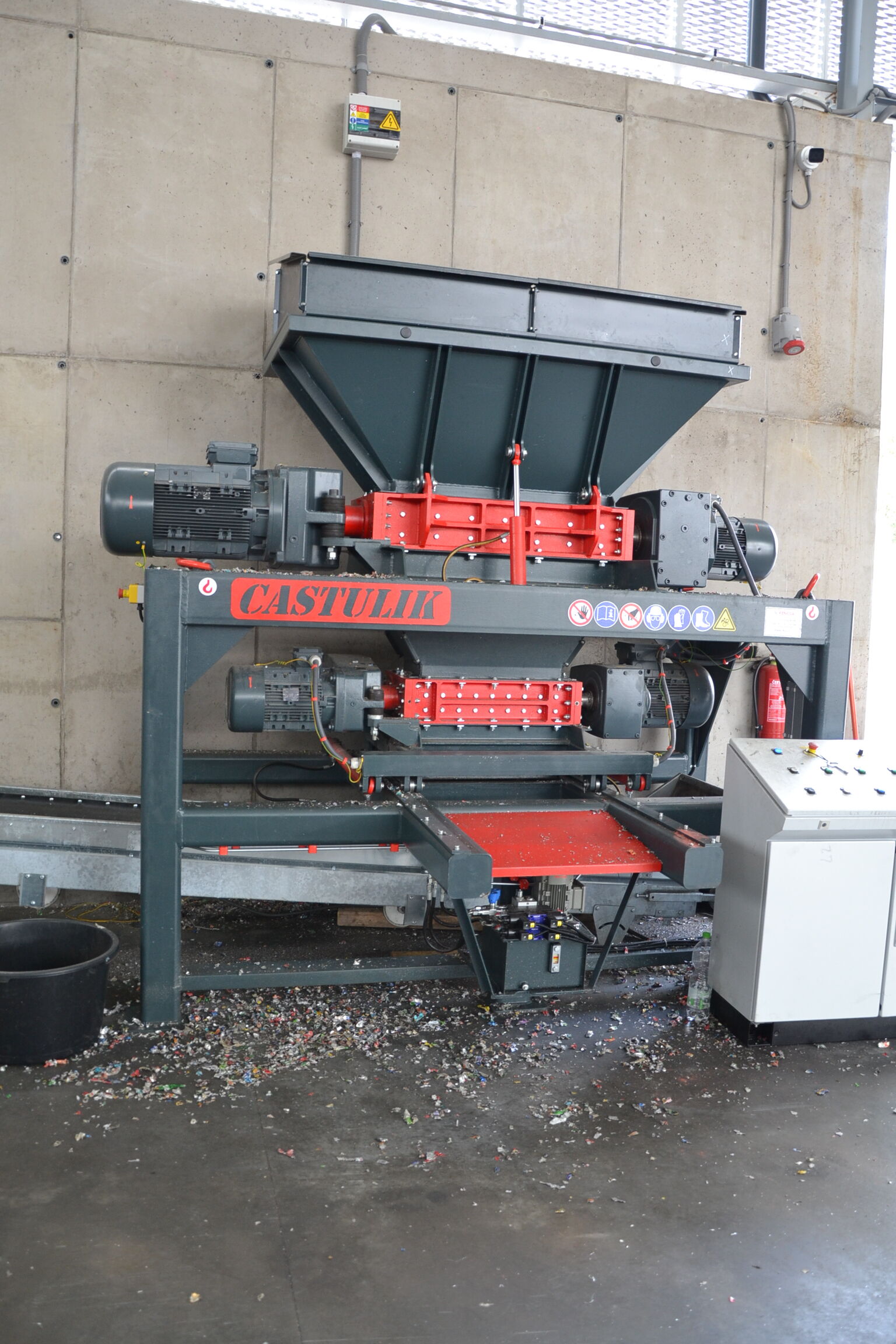
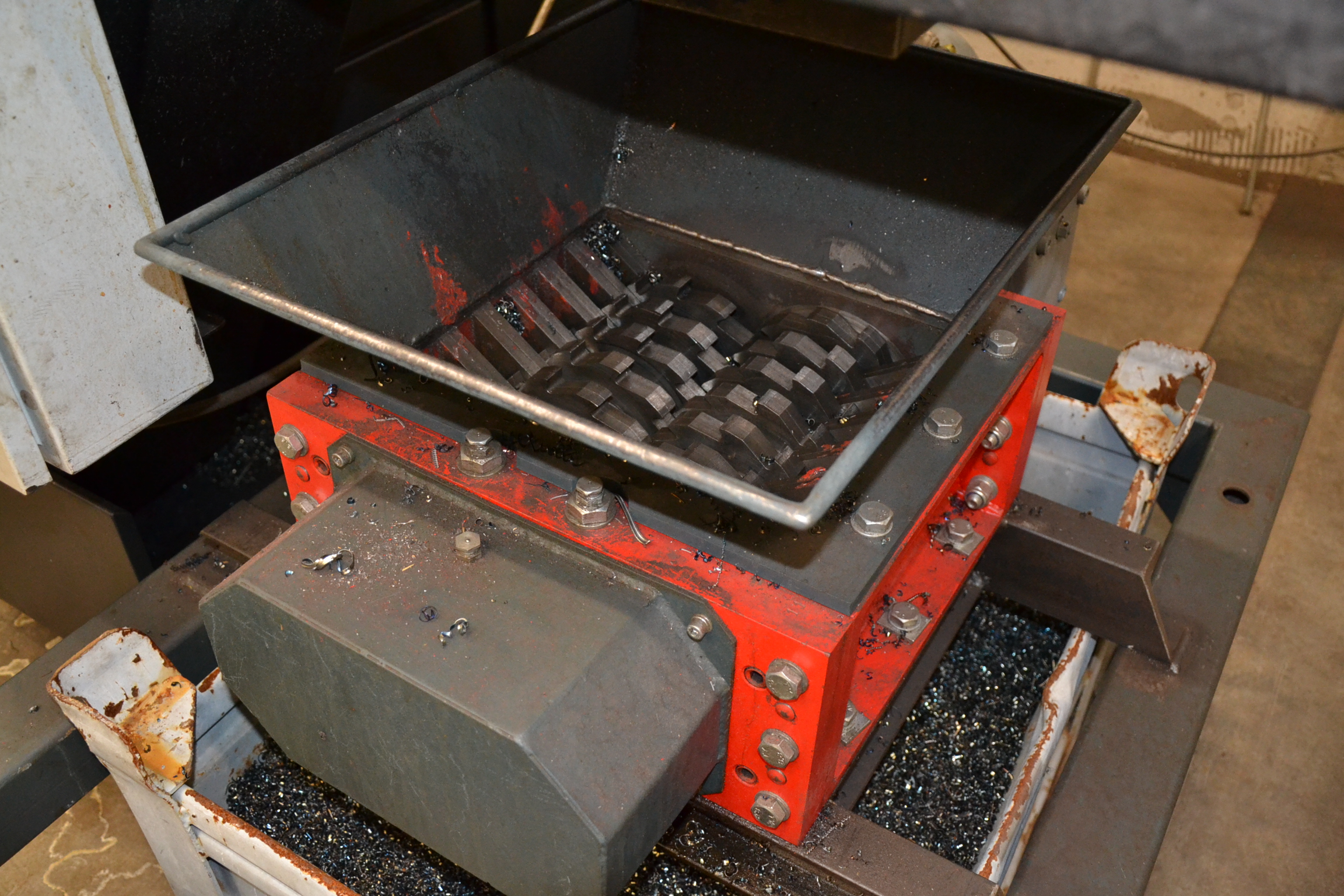
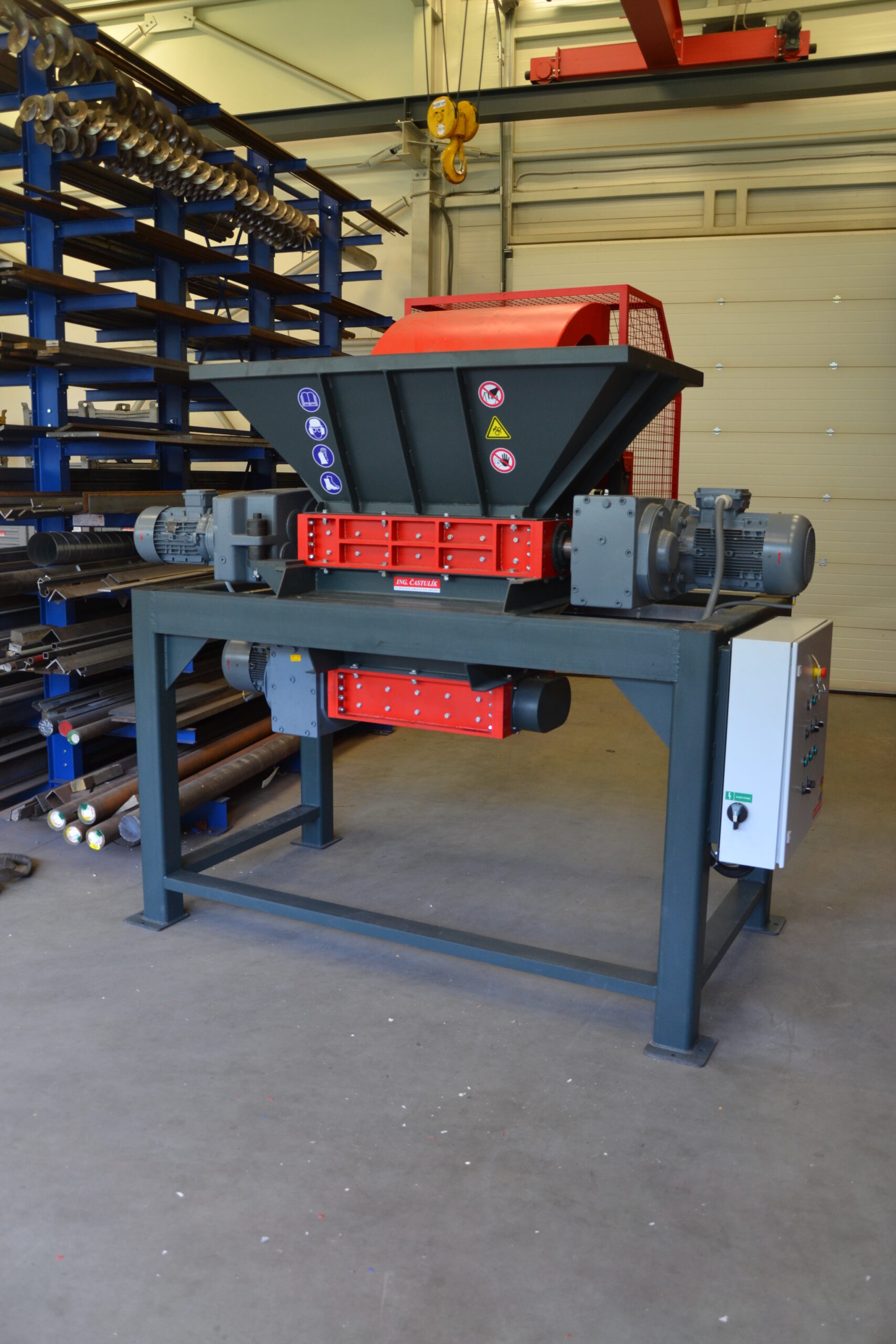
Shredding chamber DR120

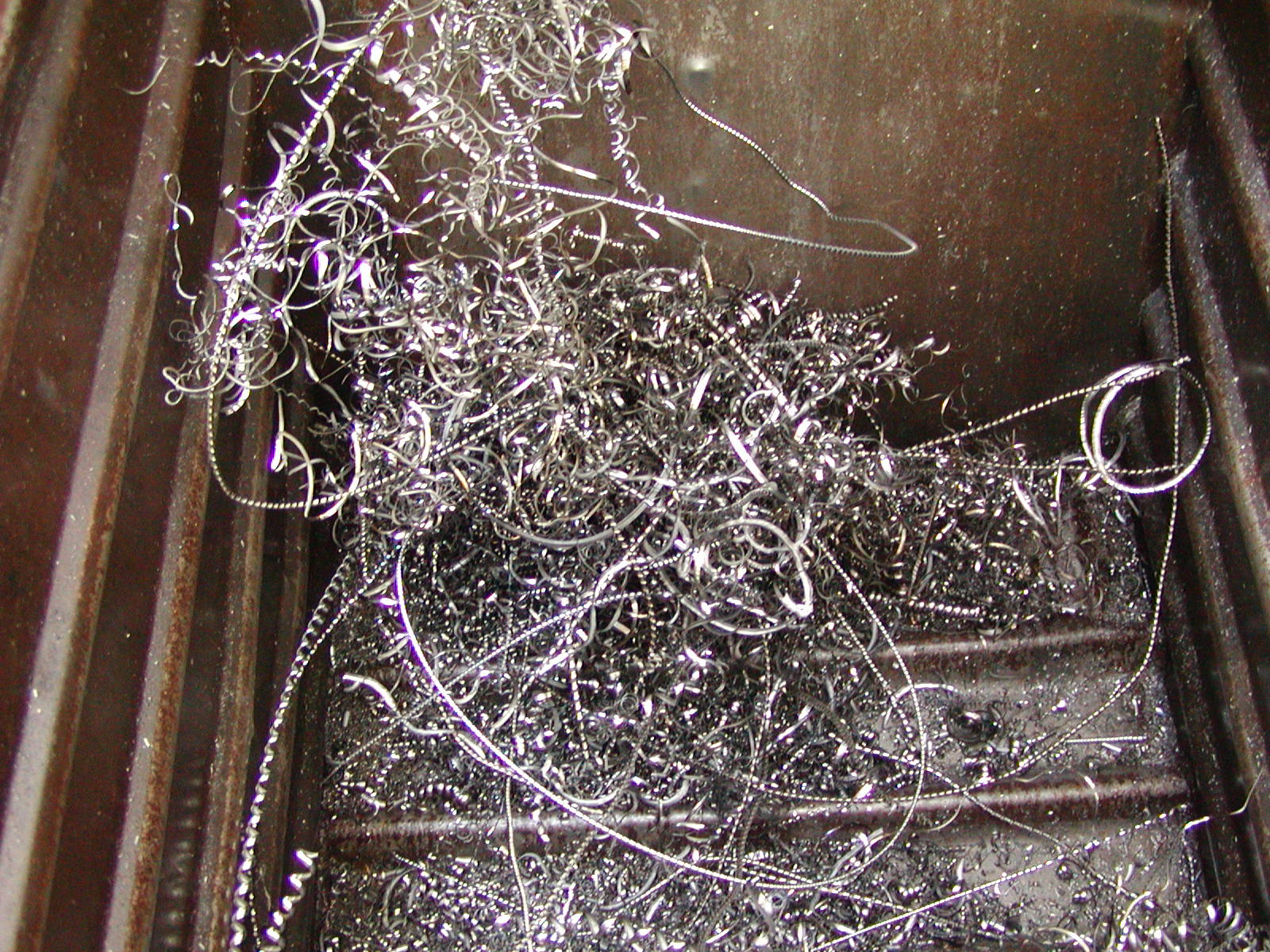


Long and tangled swarf – a handling problem
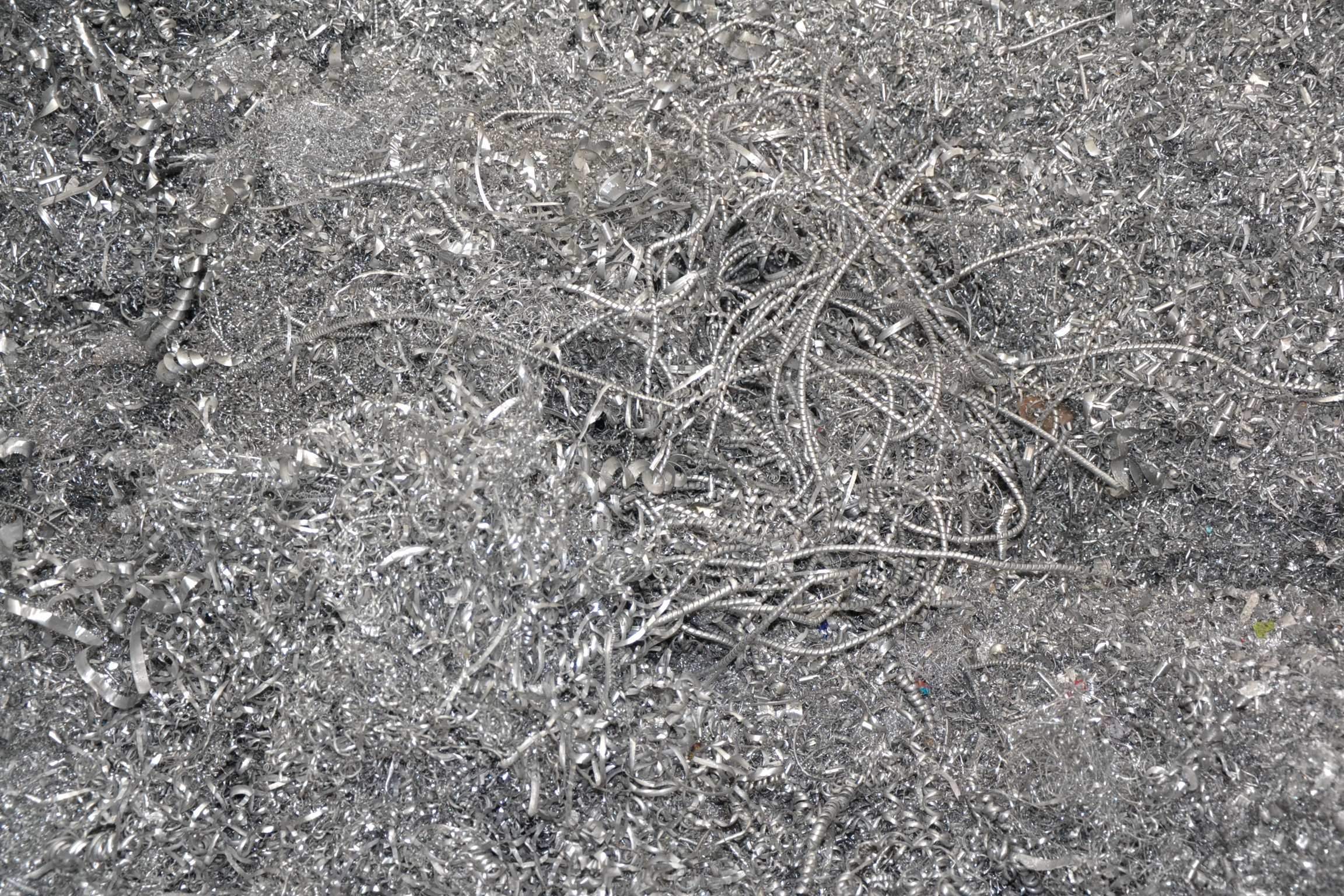
Metal machining, particularly turning, does not always produce short, free-flowing chips. Depending on the material being machined and the cutting conditions, long spiral swarf can form, becoming entangled and creating bulky masses. Even the use of chip breakers on cutting tools does not guarantee short chips under all machining conditions.
The problem is not simply the length of the swarf. Long strands become intertwined in collection containers, leaving a large amount of empty space between them. The result is material with a large volume and a low bulk density that is difficult to move, store and feed into downstream processing equipment.
CASTULIK has also encountered exceptionally large steel swarf with a cross-section of approximately 20 × 2 mm, curled into spirals up to around one metre long. This type of swarf presents a considerably greater challenge for a shredder than fine swarf produced during conventional turning.
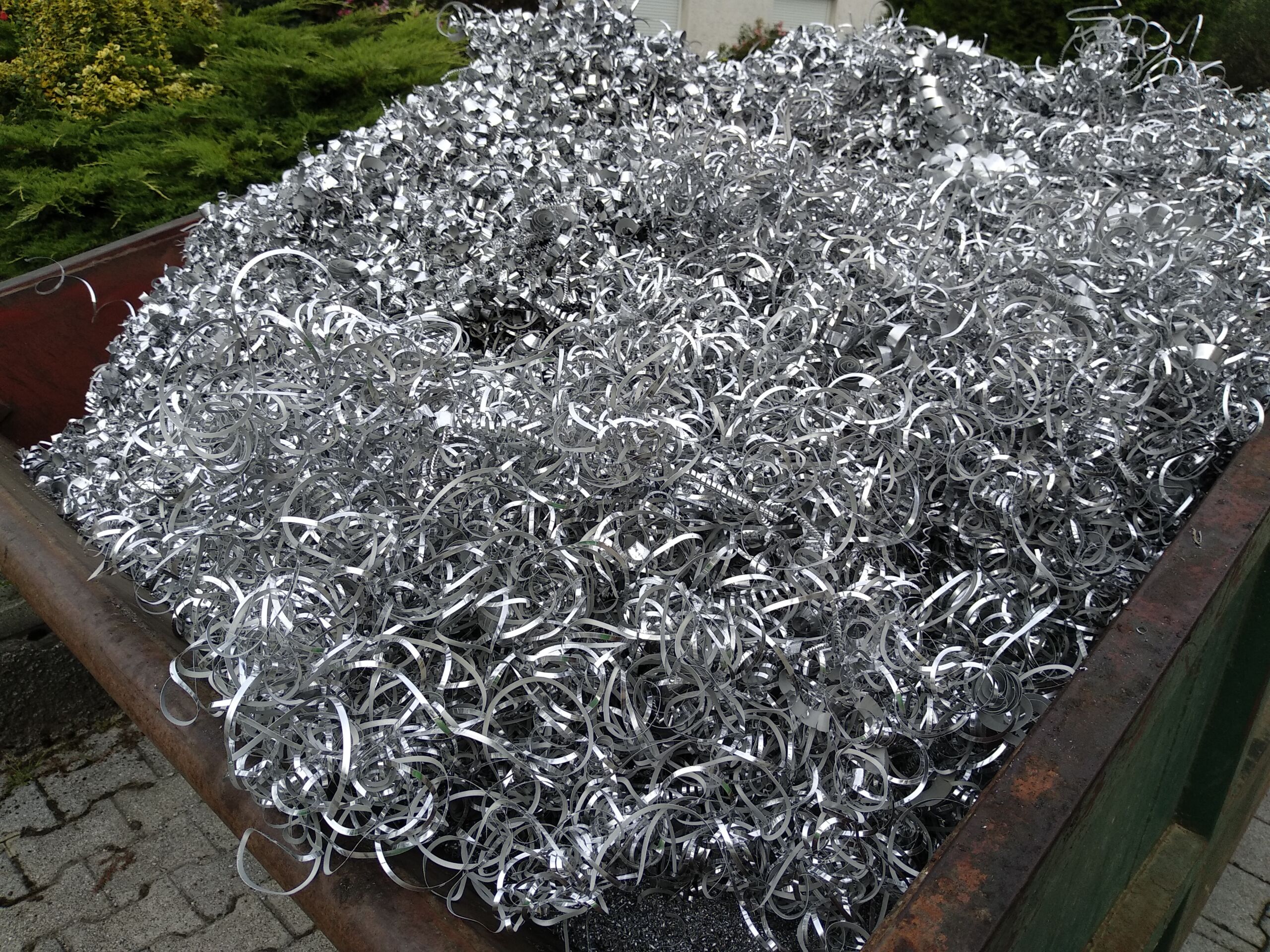
Long swarf is not limited to steel machining. CASTULIK has also developed solutions for long aluminium swarf produced when cutting aluminium under specific process conditions.



What types of metal swarf can be shredded?
When selecting the technology, it is not enough simply to classify the material as “metal swarf”. Steel, stainless steel, aluminium and copper have different mechanical properties, while the swarf itself can vary considerably in geometry.
CASTULIK has practical experience shredding steel, stainless steel, aluminium and copper swarf, ranging from small local units installed next to a machine tool to shredders integrated into centralised swarf handling systems.
Steel swarf
Steel swarf is one of the most common applications. Turning operations can produce long spiral swarf that becomes entangled and forms bulky masses.
CASTULIK steel swarf shredders are used, for example, at Czech Railways Cargo, in the KIA Slovakia engine plant, at the Kremnica Mint, in other industrial facilities and in CASTULIK’s own machine shop. The objective may be to reduce volume, prepare the material for briquetting or achieve a more suitable swarf geometry for subsequent transport and handling.
Stainless steel swarf
Long stainless steel swarf can be problematic, for example, where the material is to be returned to the metallurgical process after machining.
One such application was implemented at Booster Precision Components, where machining stainless steel components generated long swarf. The irregular form of the swarf made handling and feeding into the downstream process more difficult. Shredding was therefore introduced before the material was returned to the melting and casting process.
Aluminium swarf
Aluminium is one of CASTULIK’s well-established swarf shredding applications. Aluminium swarf shredders have been used in various configurations and with different downstream processes.
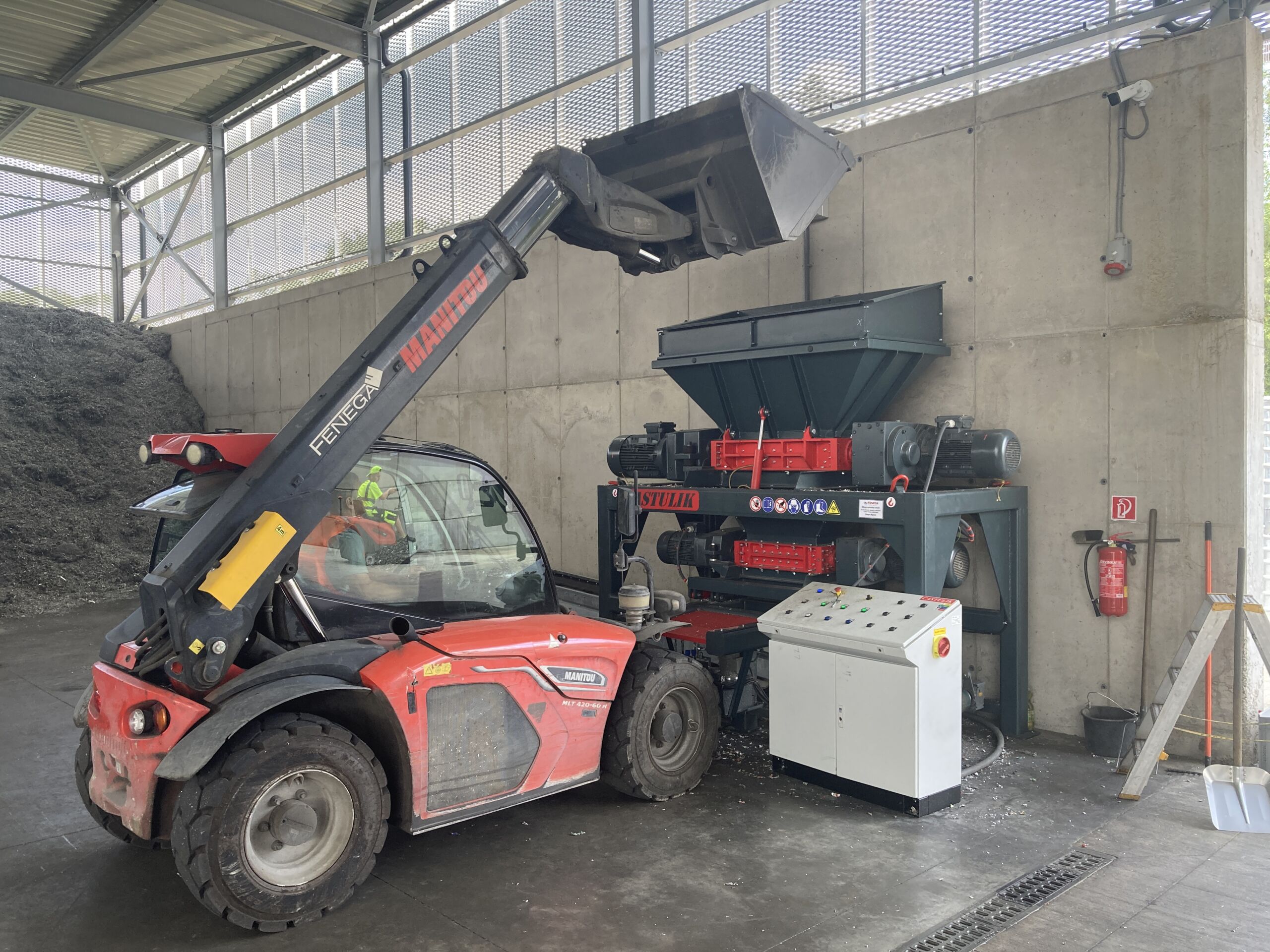
At Imopra, long aluminium swarf is fed into the shredder by tipping a collection container and, after shredding, continues to a briquetting press. Other applications include Saker and FENEGA.
CASTULIK also has experience processing aluminium swarf using single-shaft shredders fitted with a sizing screen.
Copper swarf
CASTULIK also has experience shredding long copper swarf. In an application at BM Foundry, the material is reduced to a more manageable form for subsequent metallurgical processing.
The type of metal, however, is not the only determining factor. Two types of swarf made from the same material can have completely different lengths, cross-sections and shapes and can therefore present very different demands on the shredder.


How metal swarf shredding works
Twin-shaft shredders are most commonly used to process long metal swarf. One of their key characteristics is their ability to grip long, irregular swarf, draw it into the shredding chamber and progressively break it down into shorter pieces.
Gripping and drawing in the swarf
Long swarf forms an irregular mass that cannot always be fed evenly like a conventional free-flowing bulk material. The teeth of the shredding tools engage with the tangled swarf, grip it and draw it into the space between the rotors.
The ability to grip long swarf and draw it between the rotors is one of the key advantages of the twin-shaft principle in this application.
Shearing, tearing, breaking and deformation
Once the material has been gripped, it is not subjected solely to a shearing action. Depending on its shape and mechanical properties, the swarf undergoes a combination of shearing, tearing, breaking, twisting and other mechanical deformation.
The long swarf is progressively reduced to shorter material that flows, conveys and feeds more easily.
Shredding chamber configuration
In addition to the properties of the material, the result is influenced by the configuration of the shredding chamber – particularly the width and geometry of the shredding tools, the number of teeth, the chamber size and the available torque.
Where a shorter output is required, a finer tool configuration can be used. However, this also increases torque requirements and may affect the required drive power or the size of the shredder itself.

What does shredded metal swarf look like?
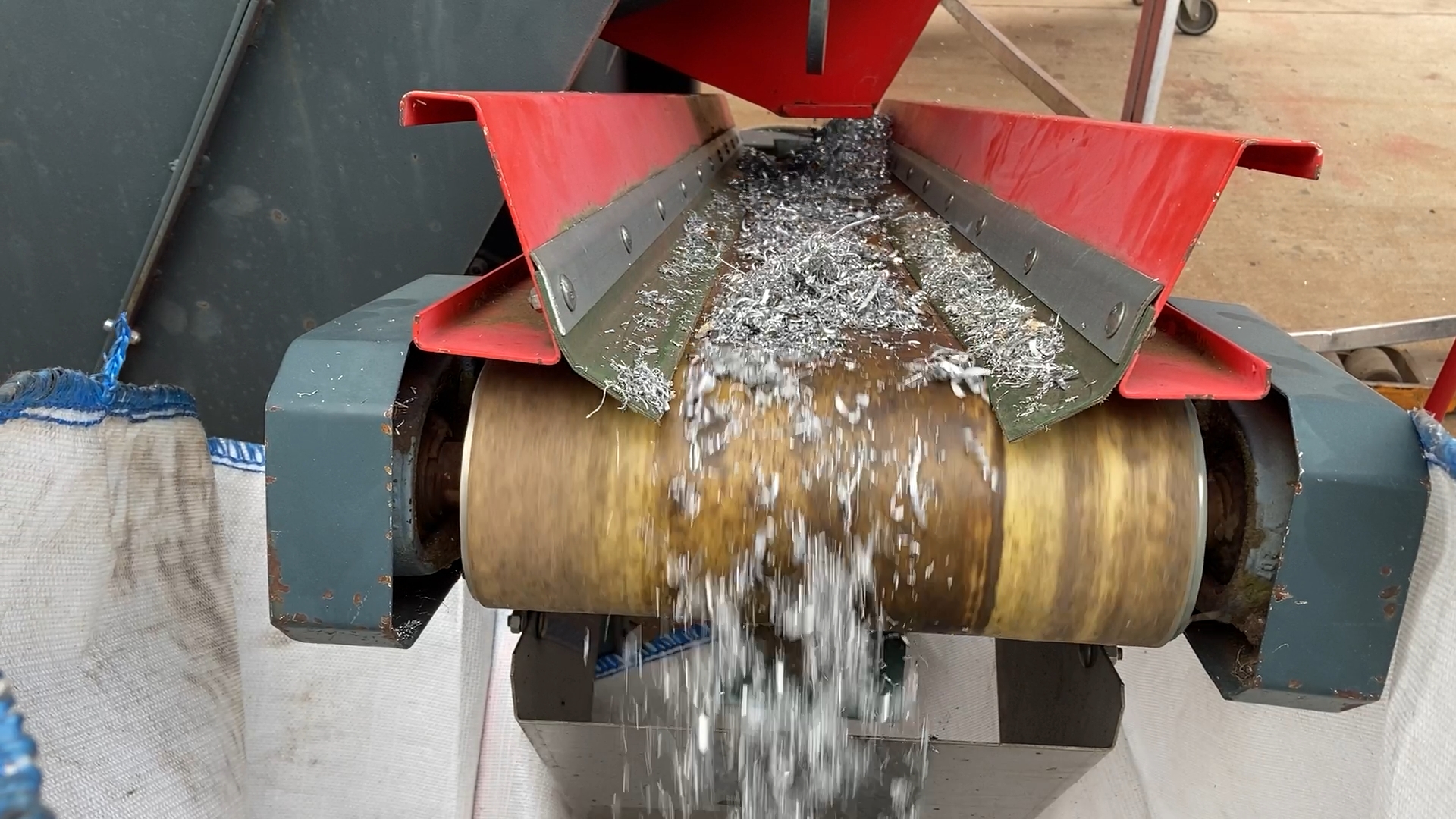
The output from a twin-shaft shredder is not a precisely sized fraction. The primary objective is to shorten long and tangled swarf and produce a more free-flowing material that is easier to transport, store or process further.
Shorter and more free-flowing swarf
The resulting geometry depends on the material and the configuration of the shredding tools. With finer configurations, a typical length for a large proportion of the shredded swarf can be in the region of 10 mm. However, this is not a guaranteed maximum size – individual longer pieces may pass through the shredding chamber.
Where an application requires greater control over the output size, a different technology can be selected, such as shredding with a sizing screen.
Significant increase in bulk density
Before shredding, long swarf becomes intertwined, leaving a large amount of empty space between individual strands. Once shortened, the material packs together much more densely.
A striking example is the steel swarf generated when turning railway wheels at Czech Railways Cargo.
10 kg/m³ → 100 kg/m³
Before shredding: approximately 10 kg/m³
After shredding: approximately 100 kg/m³
The bulk density of this particular material therefore increased by approximately ten times, corresponding to a reduction of around 90% in the volume required for the same mass of material.
This result cannot automatically be applied to every type of swarf. The degree of volume reduction depends primarily on the geometry of the incoming material.


What happens to the swarf after shredding?
Metal swarf shredding is often just one stage in a processing system. Its purpose is to transform long, irregular material into a form that is more suitable for transport, feeding or further processing.
A typical material flow might be:
Metal swarf → shredding → oil or cutting fluid separation → briquetting → material recovery
However, not every processing line needs to include all of these stages.
Shredding swarf before briquetting
Long and tangled swarf may not have a suitable geometry for direct feeding into a briquetting press. Shredding shortens the swarf and transforms it into a more free-flowing form that can be fed more easily. CASTULIK has proven applications of this type for both steel and aluminium swarf.
Separation of oil or cutting fluid
Swarf generated during machining may contain process fluids. Once the geometry of the swarf has been modified, the material can continue to equipment for centrifugal separation of oil or cutting fluid. One possible process sequence is therefore:
shredding → centrifuging → briquetting
Melting and material recovery
Briquetting is not an essential step. Shredded swarf can also continue directly to another recycling or melting process.
One example is the long stainless steel swarf generated at Booster Precision Components, where the material is returned to the melting and casting process after machining.
Volume reduction before collection
In some applications, no further processing is required. The purpose of shredding may simply be to reduce the volume of the swarf before collection, handling and transport off site.
The downstream process therefore needs to be considered before the shredder is selected, as it influences the required output and consequently the machine configuration.


Local or centralised metal swarf shredding
Depending on the organisation of production, the shredder can be installed directly next to a machine tool, within a central conveying line or at a separate central swarf processing station.
Shredder directly at the machine tool
For smaller quantities of material, the swarf can be processed directly where it is generated.
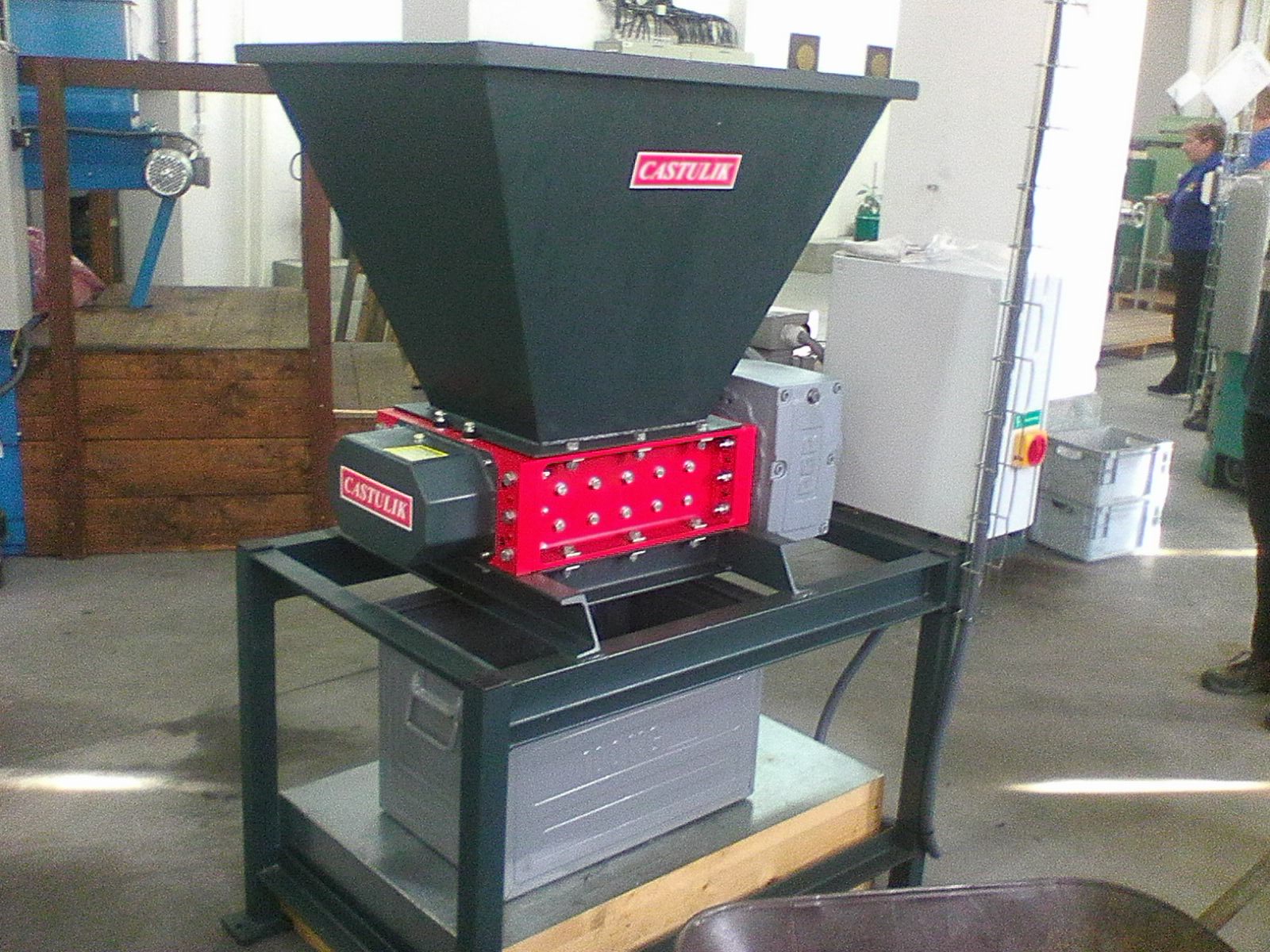
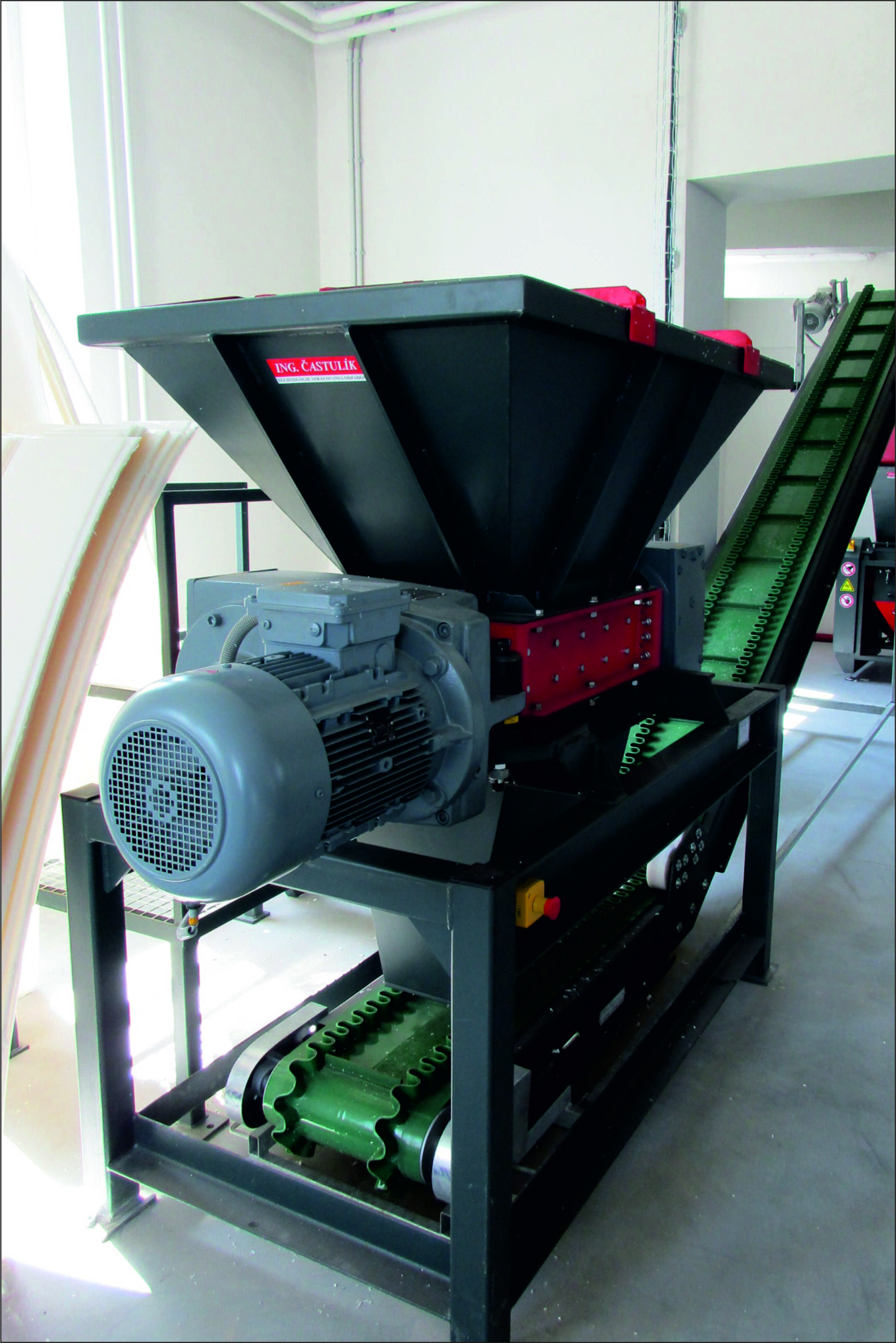
CASTULIK uses this arrangement in its own machine shop. A small DR120 twin-shaft shredder is installed at the discharge of the swarf conveyor from a lathe. The swarf is shortened and its volume reduced before it is collected in a container.
Machine tool → conveyor → shredder → collection container
Shredder in a central conveying line
In larger plants, swarf from several machining stations can be collected using a common conveying system.
This arrangement is used at the KIA Slovakia engine plant. Swarf is collected from individual machining stations and passes through a twin-shaft shredder. Short chips can pass through, while problematic long swarf is captured and shredded. The material then continues to further processing or into a collection container.
Centralised processing of swarf from containers
Another option is to collect swarf from several machining stations and subsequently process it in a single central shredder.
With this type of arrangement, the feeding method is particularly important. Gradually feeding the swarf places different demands on the machine than tipping an entire container into it at once. With batch loading, the shredder must have a sufficiently large chamber and adequate torque.
Mobile solution
A mobile shredding concept can provide an intermediate option between local and centralised processing. CASTULIK has supplied a small DR120 shredder mounted on wheels, allowing it to be moved between individual workstations in a machine shop and used wherever it is needed.
How to select a metal swarf shredder
When selecting a shredder, knowing only the quantity of waste in kilograms per hour is not enough. Two facilities producing the same quantity of swarf may require completely different machines.
A combination of several parameters must be considered.
1. Material
Steel, stainless steel, aluminium and copper have different mechanical properties.
2. Swarf geometry
The length, cross-section, shape and tendency of the swarf to become entangled are all important. Even swarf made from the same material can impose very different loads on a shredder.
3. Feeding method
Swarf can be fed manually, by conveyor or by tipping an entire bin or container into the shredder.
The feeding method can have a major influence on the required shredding chamber size and torque.
A small quantity of swarf does not automatically mean a small shredder.
A customer may generate a relatively small quantity of material but want to tip an entire container of swarf into the shredder at once. In this case, the instantaneous load on the machine can be high.
4. Required capacity
The quantity of swarf in kg/h, t/h or per shift needs to be known. However, this figure must always be assessed together with the feeding method.
5. Required output
If the objective is simply to reduce volume, the requirements may be different from those for preparing swarf for a specific downstream process.
A finer shredding tool configuration may require higher torque.
6. Downstream processing
It is important to know whether the shredded swarf will go into a container, conveying system, centrifuge, briquetting press or melting process.
7. Operating regime
A shredder used several times a day in a small machine shop has different requirements from a machine integrated into continuous industrial production.


Which metal swarf shredder should you choose?
There is no single universal machine for shredding metal swarf. CASTULIK applications show that twin-shaft shredders are the predominant solution, although four-shaft or single-shaft machines can also be used for specific requirements.
DR twin-shaft shredders
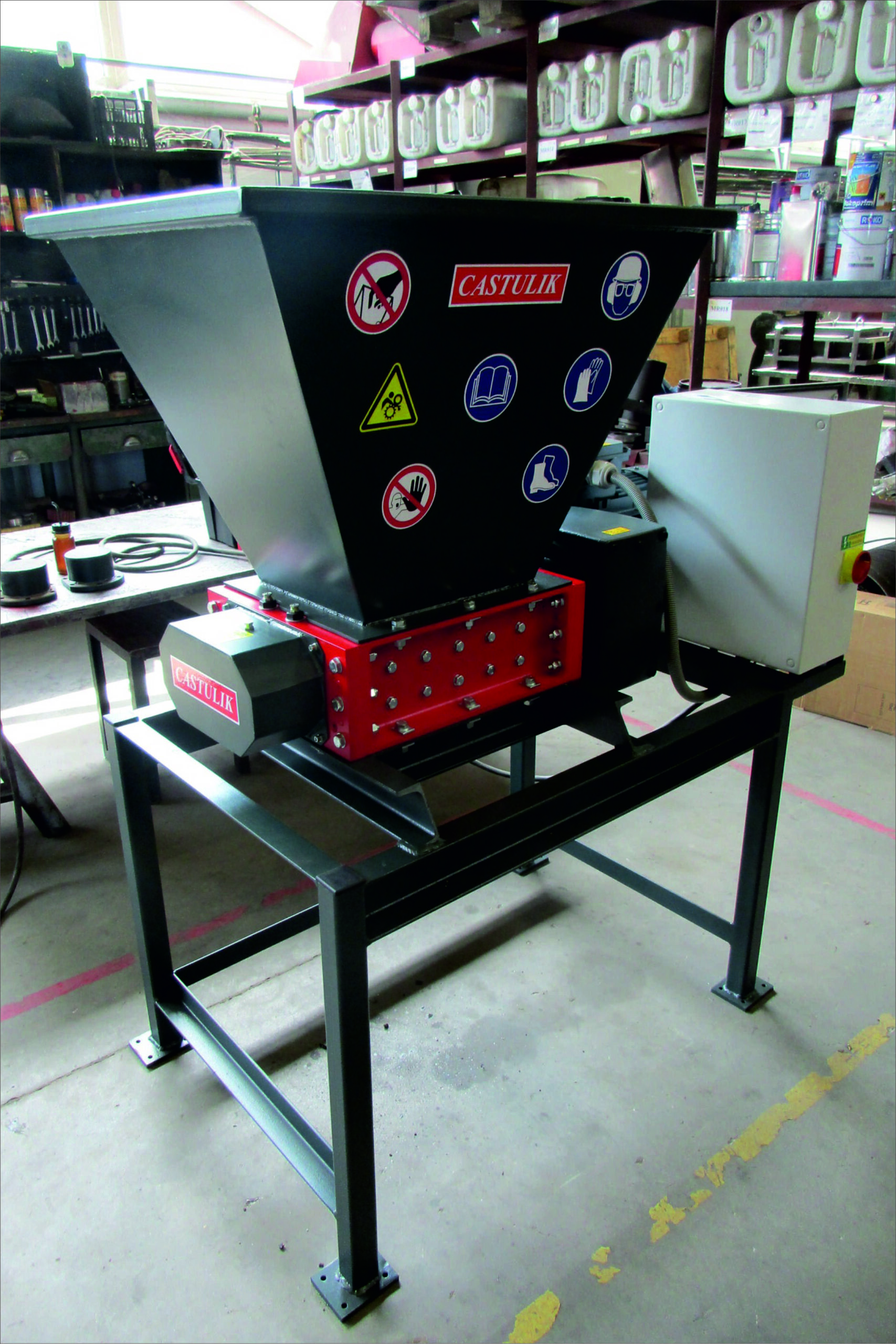
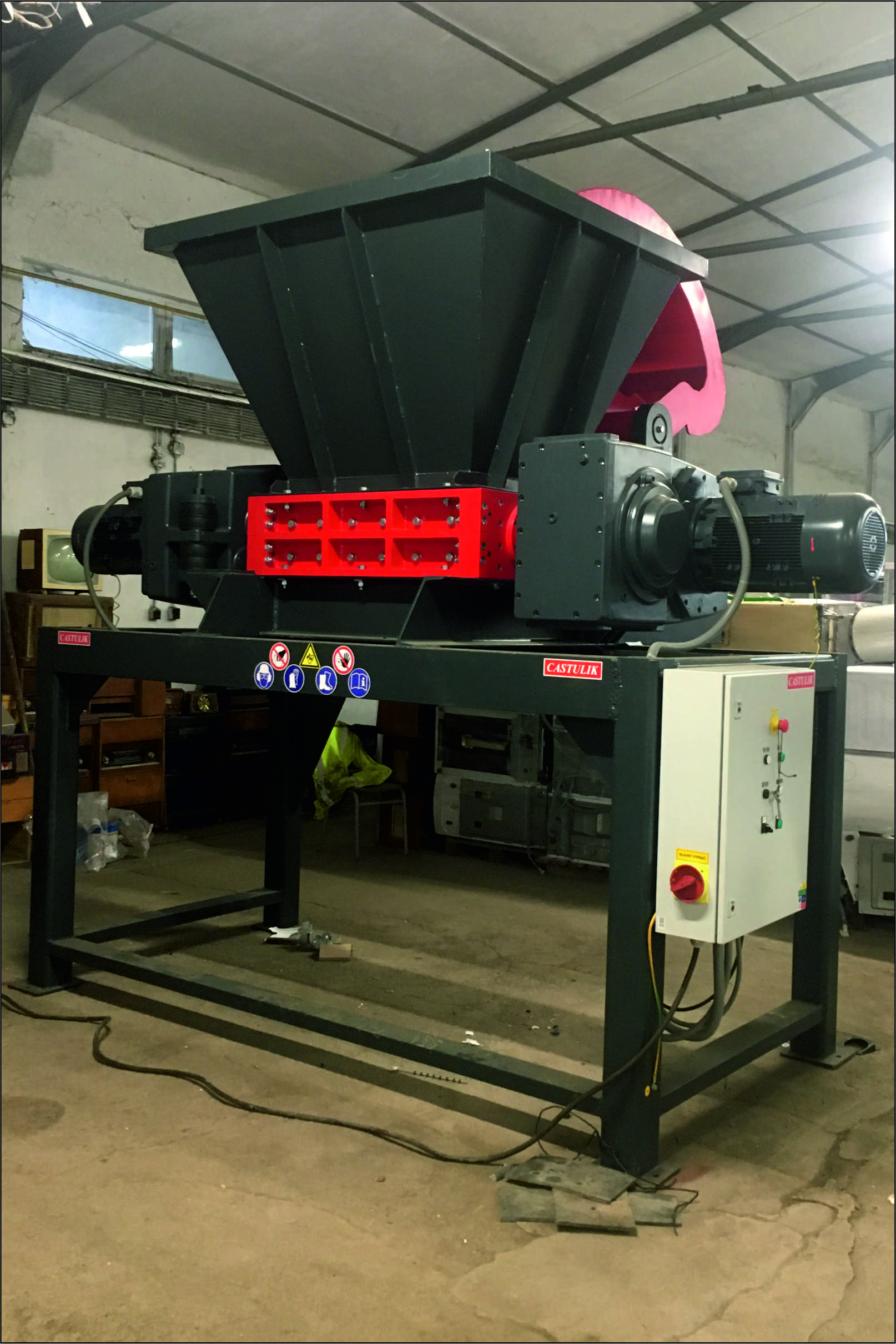
Twin-shaft shredders are CASTULIK’s primary solution for long and tangled swarf. The teeth of the shredding tools can grip irregular swarf, draw it between the rotors and progressively reduce it to shorter pieces.
CASTULIK offers several machine sizes, including the DR120, DR160 and DR240, with the specific size and configuration selected according to the application.
The same basic machine range can be used for very different tasks. For example, the DR120 operates as a small local shredder in CASTULIK’s own machine shop, while a different DR120 configuration processes considerably more demanding swarf at Czech Railways Cargo.
ARIES four-shaft shredders
For more complex applications, a four-shaft or multi-stage shredding solution can be used.
One example is FENEGA, where the ARIES can operate with one or two shredding stages depending on the material being processed. Aluminium swarf is processed in a single stage, while other types of aluminium waste can be processed in multiple stages.
CASTOR single-shaft shredders
CASTULIK also has experience using CASTOR single-shaft shredders, particularly for aluminium swarf.
A key feature of these machines is the sizing screen. The material remains in the shredding process until it is small enough to pass through the screen. This solution can be suitable where greater control over the output size is required.
We therefore recommend selecting the specific shredder type and configuration according to the actual material, feeding method and required result, rather than on the quantity of swarf alone.


Overview of suitable CASTULIK machines

VIDEOSHOWROOM
FAQ – frequently asked questions about metal swarf
What types of metal swarf can be shredded?
CASTULIK has practical experience shredding steel, stainless steel, aluminium and copper swarf. However, the type of metal alone does not determine whether a particular shredder is suitable. The length, cross-section and geometry of the swarf, the feeding method and the required result are also important.
Can long and tangled metal swarf be shredded?
Yes. Long and tangled swarf is a typical application for twin-shaft shredders. The teeth of the shredding tools grip the long swarf and draw it in-between the rotors, where it is progressively shortened through a combination of shearing, tearing, breaking and deformation.
How much can shredding reduce the volume of swarf?
The result depends primarily on the geometry of the incoming swarf. With very long and bulky swarf, the reduction can be substantial. In specific CASTULIK applications, volume reductions of up to approximately 90% have been achieved.
What size is the swarf after shredding?
The output from a twin-shaft shredder is not a precisely sized fraction. The resulting geometry depends on the material and the configuration of the shredding tools. With finer configurations, a typical length for a large proportion of the material can be in the region of 10 mm, although individual longer pieces may pass through the shredding chamber.
Can aluminium swarf be shredded?
Yes. CASTULIK has practical experience with a number of aluminium swarf applications. Depending on the specific requirements, twin-shaft, four-shaft or single-shaft shredding solutions can be used.
Can shredded swarf be briquetted?
Yes. Shredding can be used as a pre-treatment before briquetting. Its purpose is to shorten long and tangled swarf and prepare the material in a form that is easier to feed into the next stage. CASTULIK has proven applications of this type for both steel and aluminium swarf.
What capacity metal swarf shredder do I need?
The required shredder capacity cannot be determined solely from the quantity of swarf in kg/h. The material, swarf geometry, required output and feeding method must also be considered. A facility generating a relatively small quantity of swarf may still require a larger shredder if an entire container is to be tipped into the machine at once.
Does short swarf also need to be shredded?
Not always. If short swarf does not cause problems during conveying, storage or further processing, shredding may not be necessary. At KIA Slovakia, for example, the shredders are integrated into the conveying line so that short chips can pass through, while problematic long swarf is captured and shredded.
We will design a solution for your metal swarf
Every metal swarf shredding application has different requirements. To design the right solution, we need to know the type of metal, swarf geometry, quantity, feeding method and required result.
Send us photographs or a sample of the swarf, the approximate quantity of material and information about what needs to happen after shredding. Based on this information, we can recommend a suitable shredder type and shredding chamber configuration.
For non-standard applications, we can verify the proposed solution by carrying out trials with the actual material.
