
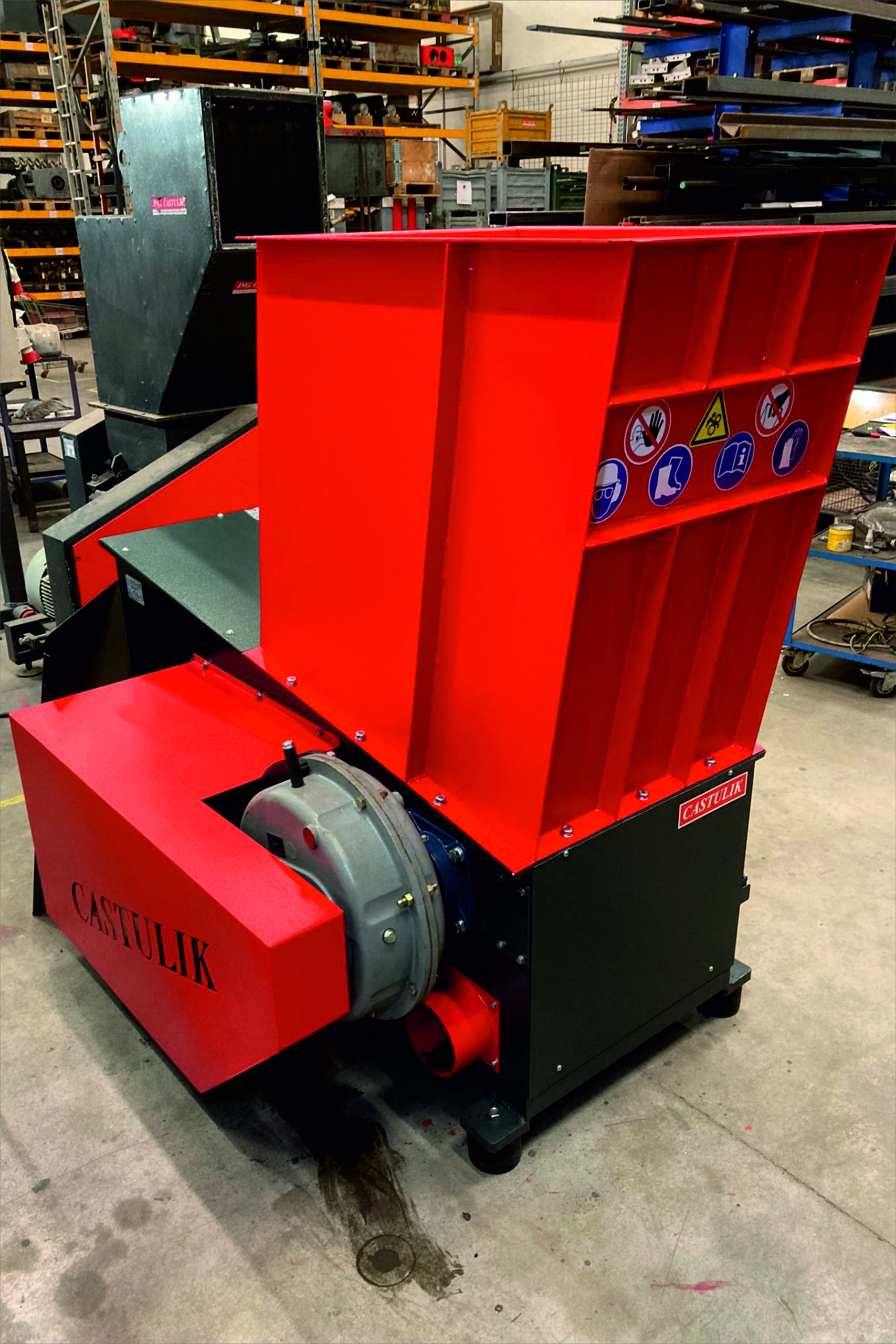
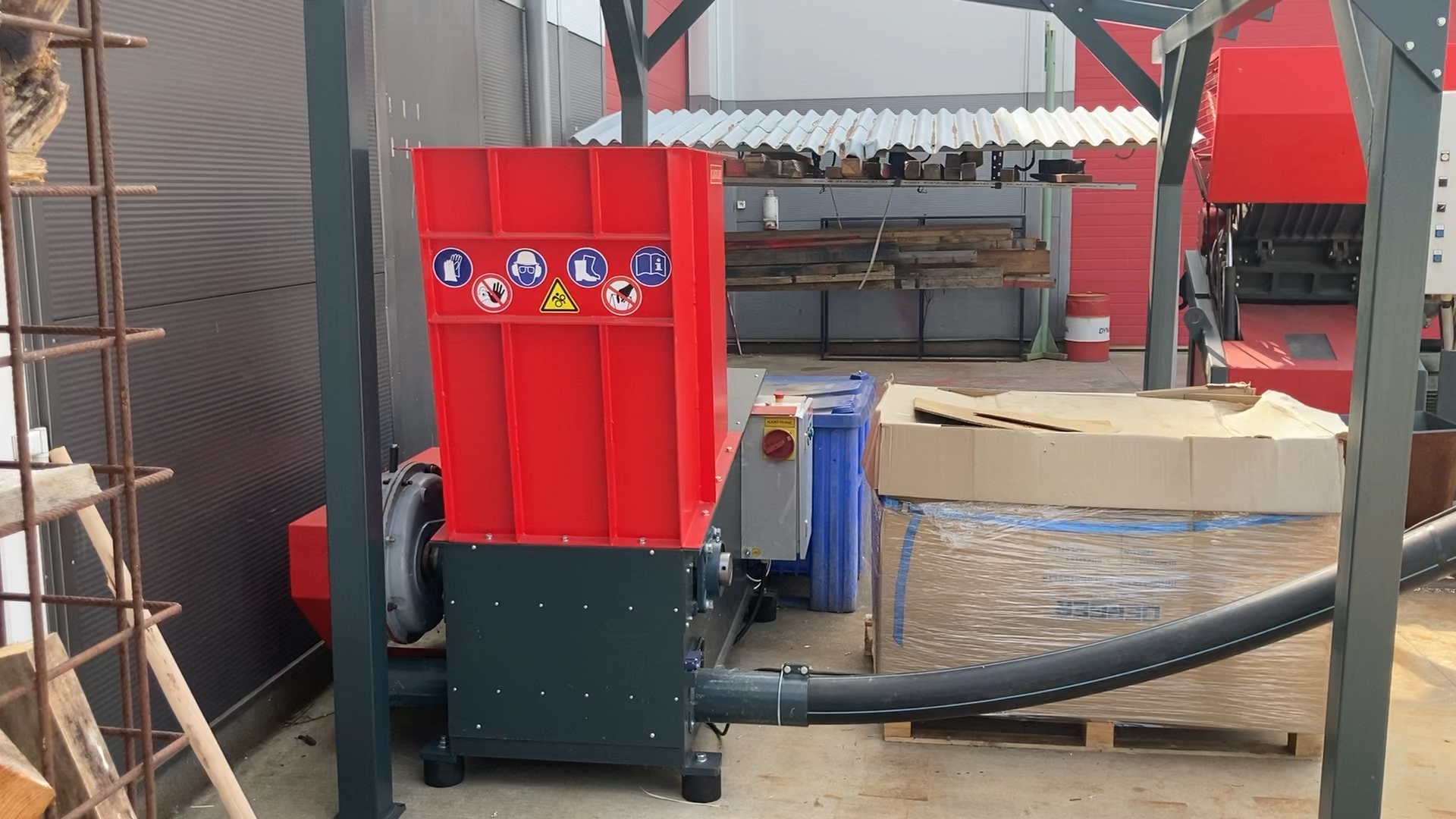
Single-shaft shredder PICUS with discharge screw conveyor

cardboard crates of various sizes:
600 x 390 x 125 mm 416g
400 x 300 x 125 mm 290 g
580 x 390 x 210 mm 592 g

for confidentiality reasons, unbranded crates were used for the shredding trials
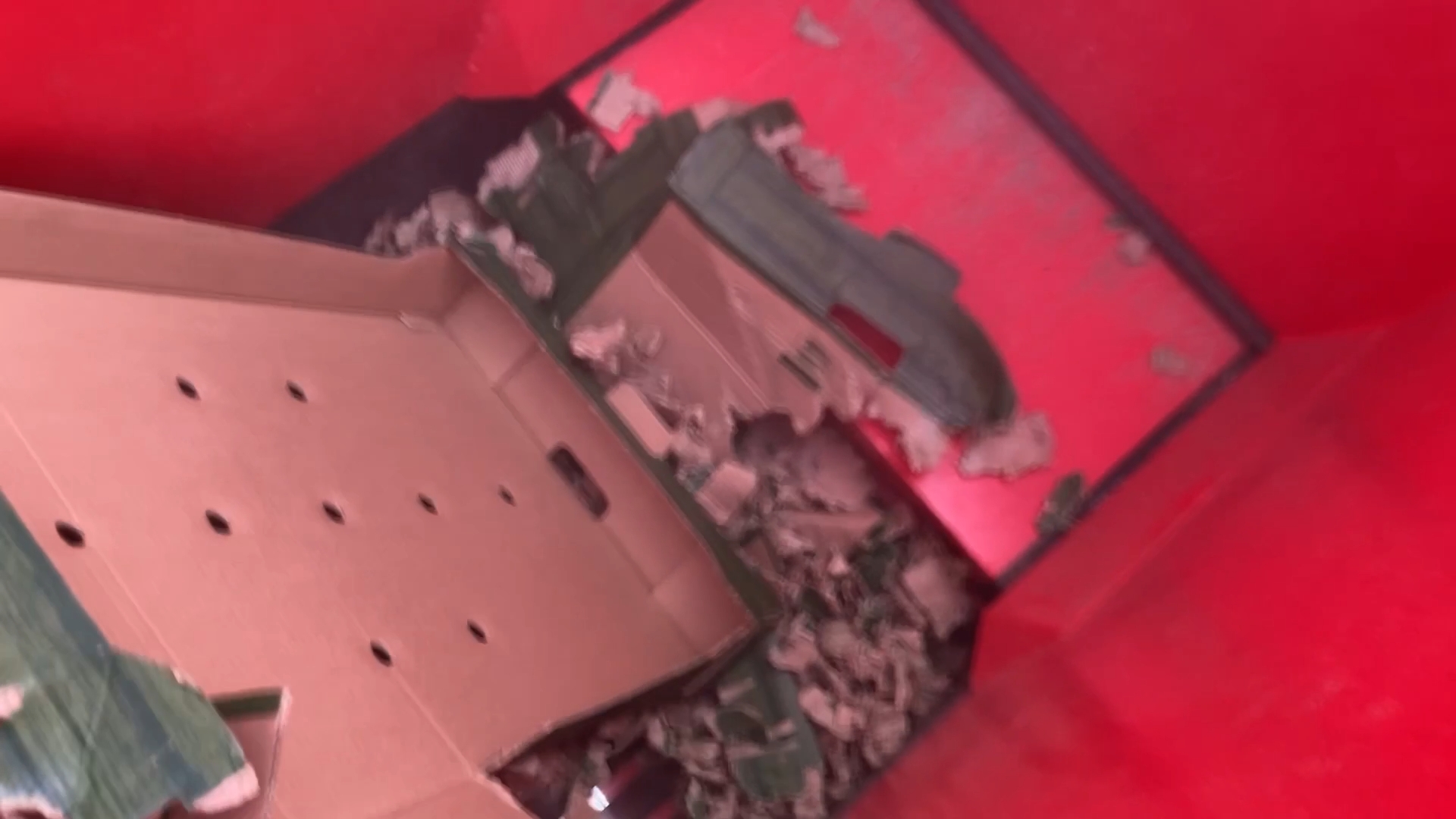
crates in the shredding chamber being drawn into the shredding system
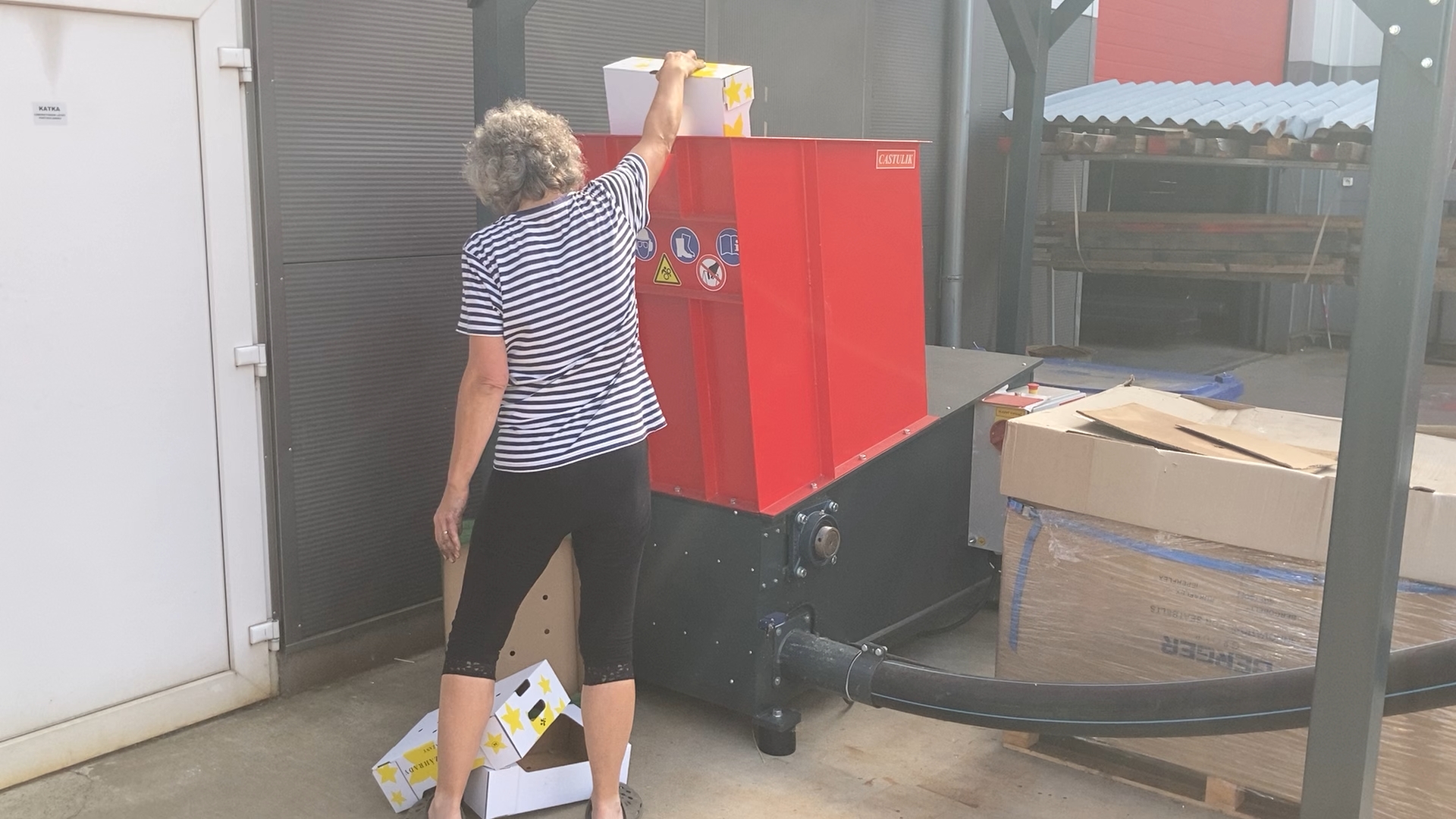
convenient and safe loading of material into the shredder
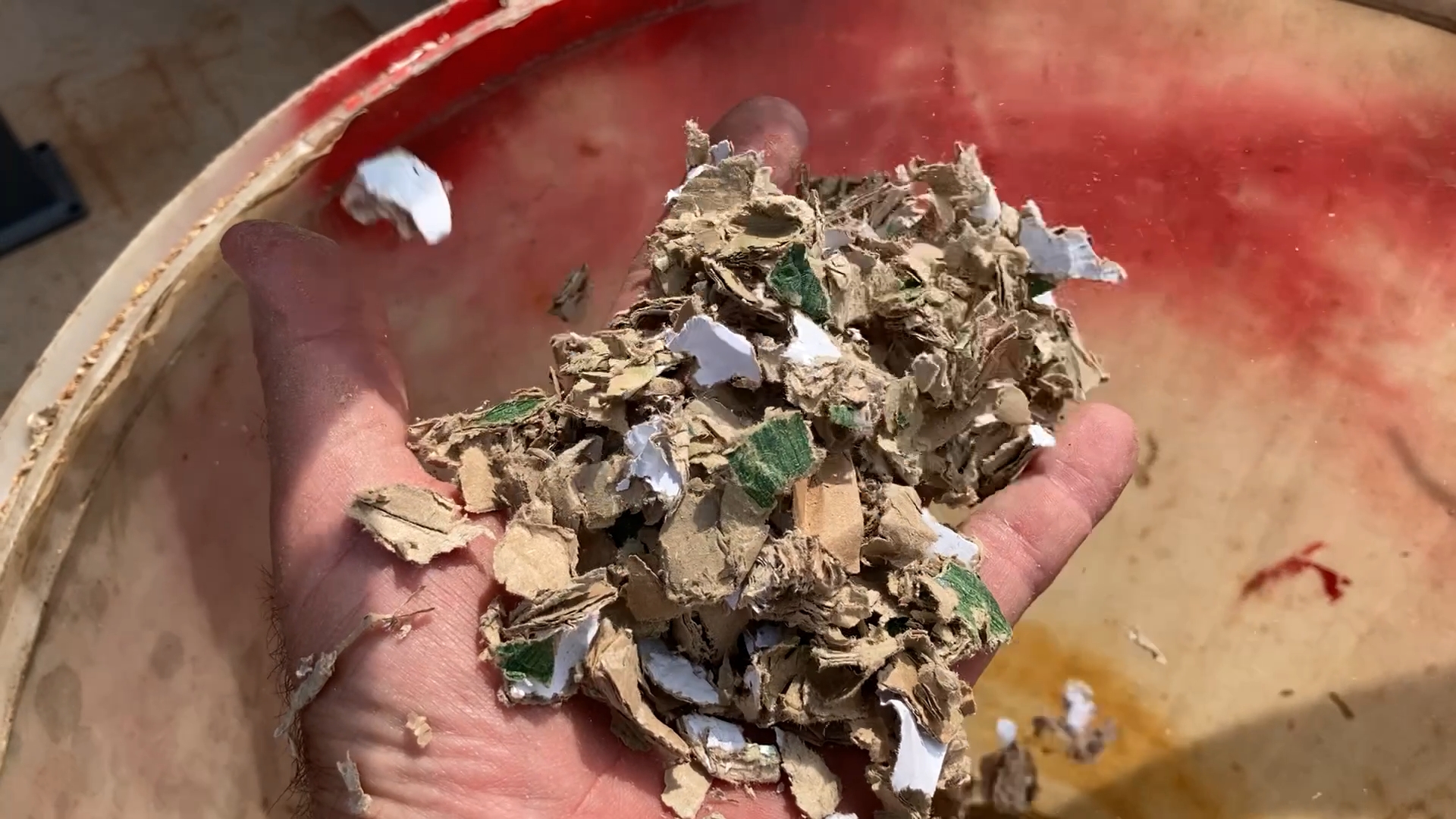
final particle size below 10 mm
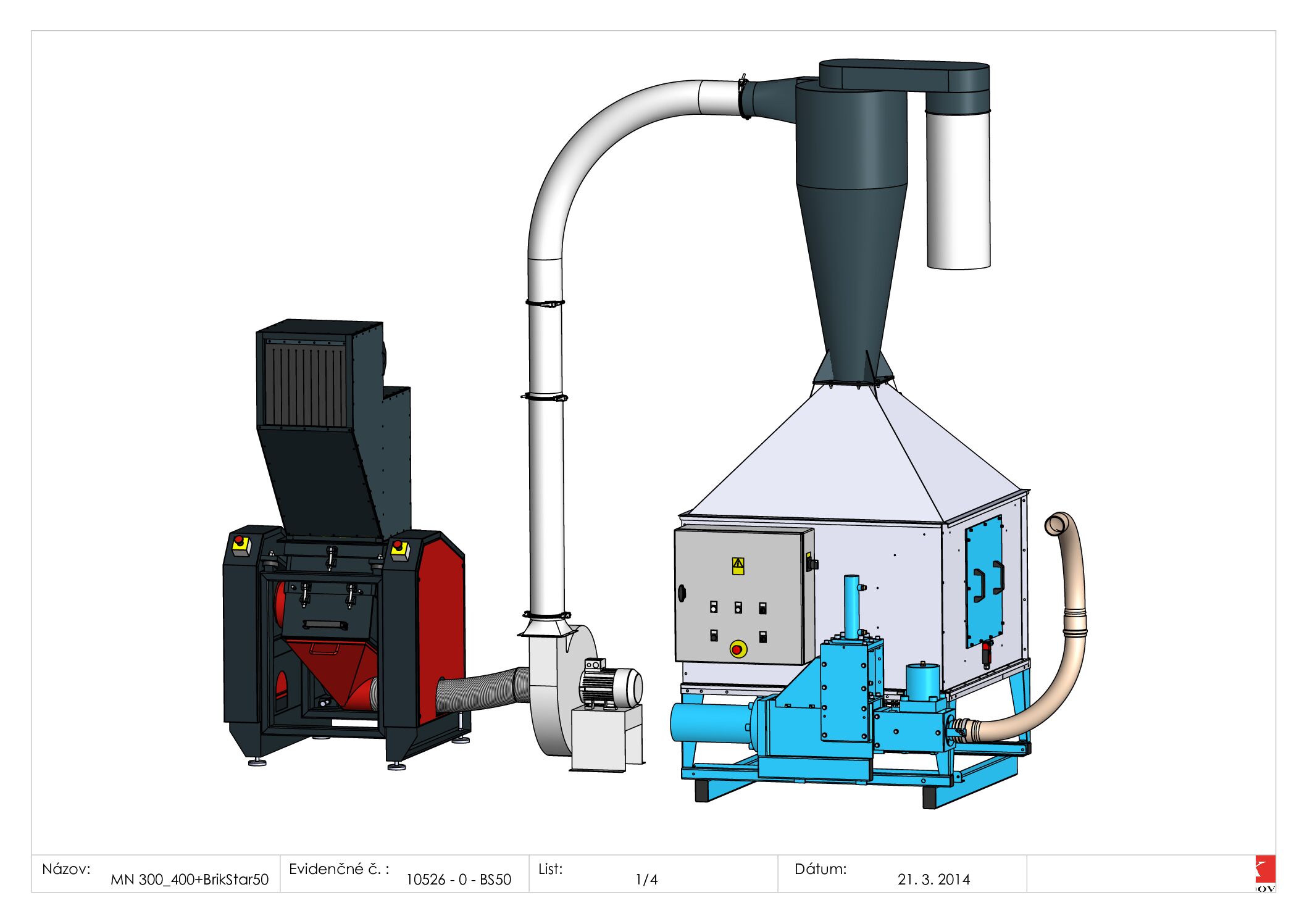
illustration of the shredder and briquetting press connected by a pneumatic conveying system
Cardboard boxes and crates are a common form of packaging waste in many businesses. However, when they carry the logo of a manufacturer, retailer or specific brand, their disposal presents an additional requirement: the packaging must be reliably destroyed before it leaves the premises to prevent it from being reused or misused.
We encountered this requirement when designing a processing system for an operator of large-scale greenhouses growing tomatoes and cucumbers.
Based on application trials, we designed a solution incorporating a 15 kW PICUS single-shaft shredder, pneumatic conveying and a cyclone. The shredded cardboard can then either be added directly to waste paper for recycling or fed into a briquetting press.
Why do branded cardboard boxes need to be shredded?
Cardboard crates used for packing and distributing vegetables often carry logos and other identifying information.
In this particular application, the customer uses:
- cardboard crates bearing its own logo,
- packaging branded with a trading partner’s logo,
- cardboard boxes carrying the logos of individual customers.
Allowing this packaging to leave the premises intact together with ordinary waste paper creates a risk of unwanted reuse.
The purpose of shredding is therefore not simply to reduce the volume of cardboard waste. An important objective is to physically destroy the original packaging, including its printed graphics and identifying features.
The requirement: approximately 400 kg of cardboard crates per week
The customer needs to process approximately 400 kg of used cardboard crates per week.
The requirement was to shred them to a particle size of approximately 10 mm or less, while also providing a simple means of handling the lightweight shredded cardboard.
The system also needed to accommodate two possible routes for subsequent processing:
- sending the shredded cardboard together with other waste paper for material recovery and recycling,
- compacting the shredded cardboard using a briquetting press.
Application trials for cardboard shredding
Before selecting the specific equipment, we carried out application trials using the customer’s actual cardboard crates.
Such trials are an important part of designing a suitable processing system. Identifying the material alone is not enough. The result is also influenced by the structure of the cardboard packaging, its thickness and dimensions, the feeding method and the required output particle size.
Based on the trial results, we selected a 15 kW PICUS single-shaft shredder for this application.
PICUS single-shaft shredder for cardboard
The single-shaft shredder provides controlled cutting of the material, with the required output particle size determined by a screen.
During shredding, the cardboard crates are completely mechanically destroyed, turning the original boxes into loose shredded cardboard.
This achieves two objectives at the same time:
- Destruction of the packaging
The original cardboard crate can no longer be reused. Logos, graphics and other identifying features are mechanically broken down into small pieces.
- Preparing the cardboard for further processing
The resulting, more uniform material is easier to transport and can be prepared for subsequent recycling or compaction.
Pneumatic conveying of shredded cardboard
The process does not end with shredding.
Shredded cardboard has a low bulk density. We therefore propose using a pneumatic conveying system to transport the material.
The shredded cardboard is collected beneath the shredder and transported through pipework by an air stream to a cyclone.
Inside the cyclone, the solid material is separated from the conveying air and can then pass to the next stage of the process.
The proposed process is:
cardboard crates → PICUS single-shaft shredder → pneumatic conveying → cyclone → further processing
Option 1: Shredded cardboard for recycling
The simplest solution is to discharge the shredded cardboard from the cyclone directly into a collection container.
There, it can be combined with other suitable paper and cardboard waste generated at the facility and subsequently sent for material recovery and recycling.
The advantage is that branded packaging does not leave the premises in its original form.
Process:
cardboard crates → PICUS → pneumatic conveying → cyclone → waste paper container → recycling
Option 2: Briquetting shredded cardboard
The second option is to convey the shredded cardboard from the cyclone directly into the hopper of a briquetting press.
Briquetting mechanically compacts the lightweight, bulky material into a more compact form.
The main advantage is a significant increase in the bulk density of the cardboard waste. The same quantity of material then requires less storage space and can be stored, handled and transported more efficiently.
Process:
cardboard crates → PICUS → pneumatic conveying → cyclone → briquetting press → cardboard briquettes
The specific method of subsequent material recovery or energy recovery from the briquettes must be appropriate for the properties and classification of the material and meet the requirements of the relevant end user or processing facility.
Cardboard shredding is about more than reducing waste volume
This application demonstrates that an industrial shredder does not have to serve solely to reduce the size of waste material.
For branded cardboard packaging, shredding performs several functions at the same time:
- protects the brand by destroying the original packaging,
- prevents unwanted reuse of cardboard crates,
- reduces the size of the cardboard waste,
- produces material suitable for automated conveying,
- prepares the cardboard for subsequent recycling,
- enables further compaction using a briquetting press.
Do you need to shred cardboard boxes or crates?
The appropriate shredding technology depends on the dimensions and structure of the cardboard packaging, the required output particle size, the quantity of material and how it will be used or processed afterwards.
For this reason, before selecting a specific shredder, we can carry out application trials using your own material.
Based on the results, we can design not only the cardboard shredder itself but also the downstream equipment required for material conveying, separation, collection or compaction.