.

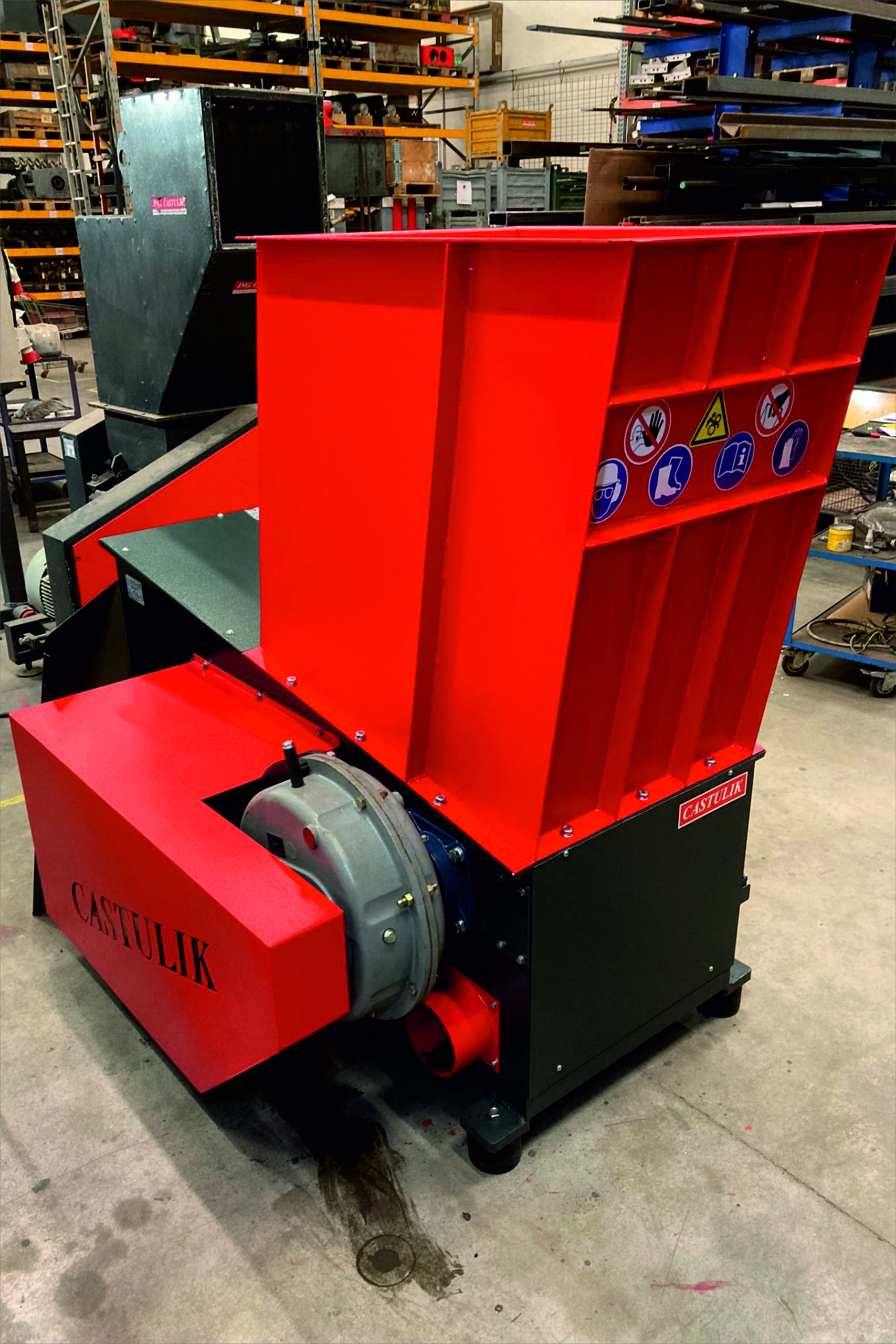
four-shaft shredder ARIES240/900

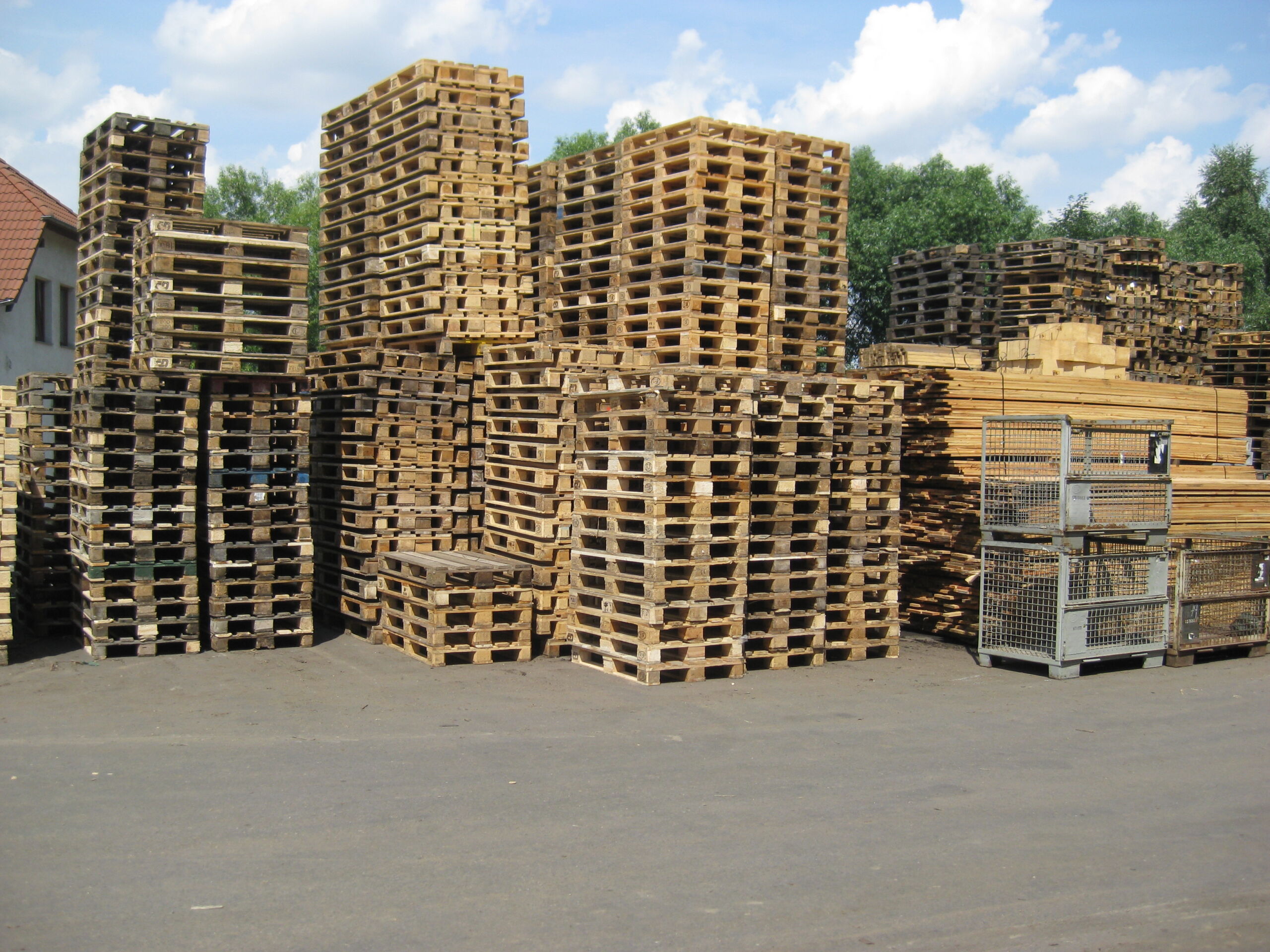
loading pallets for shredding
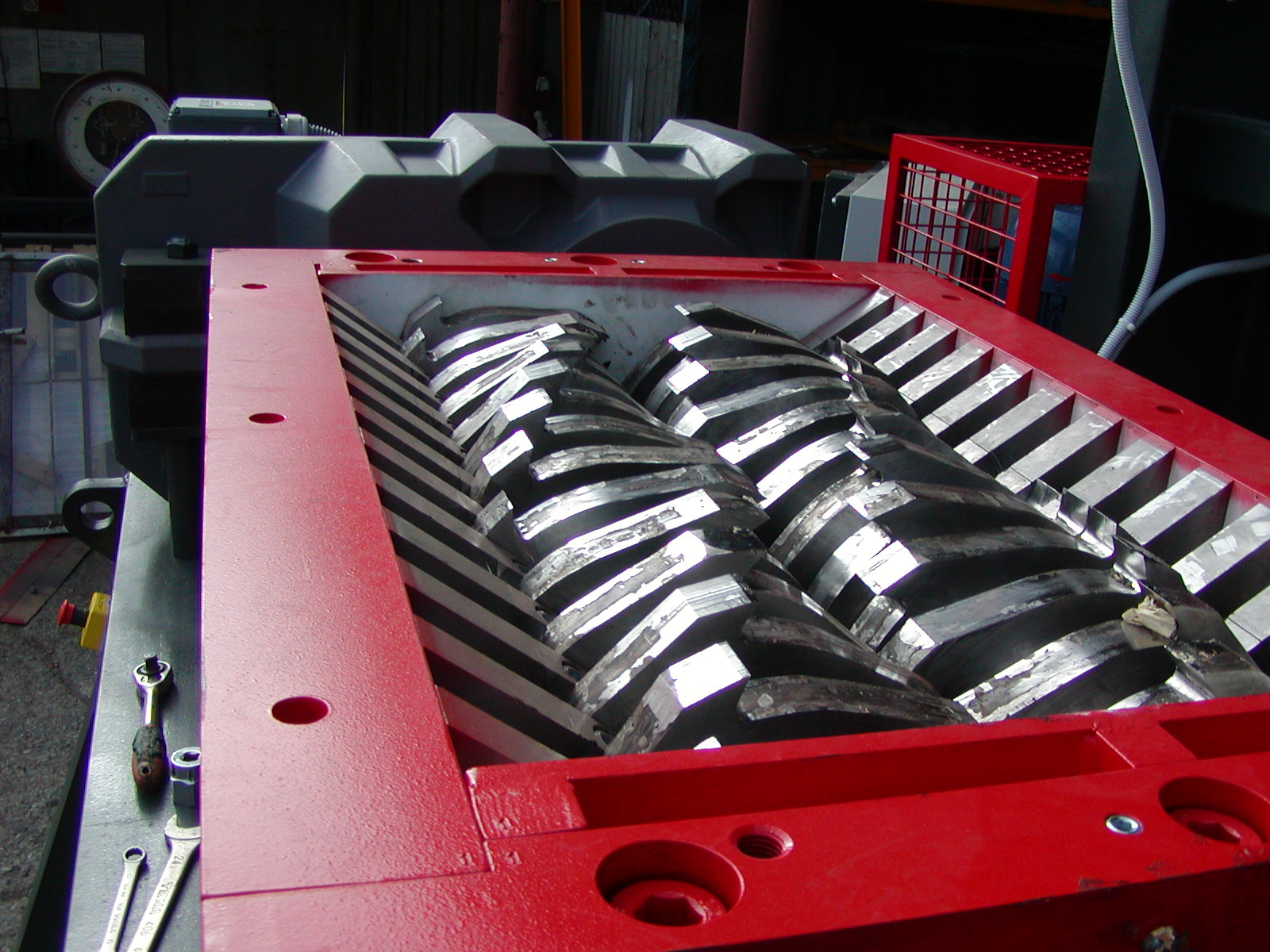
first stage shredding chamber
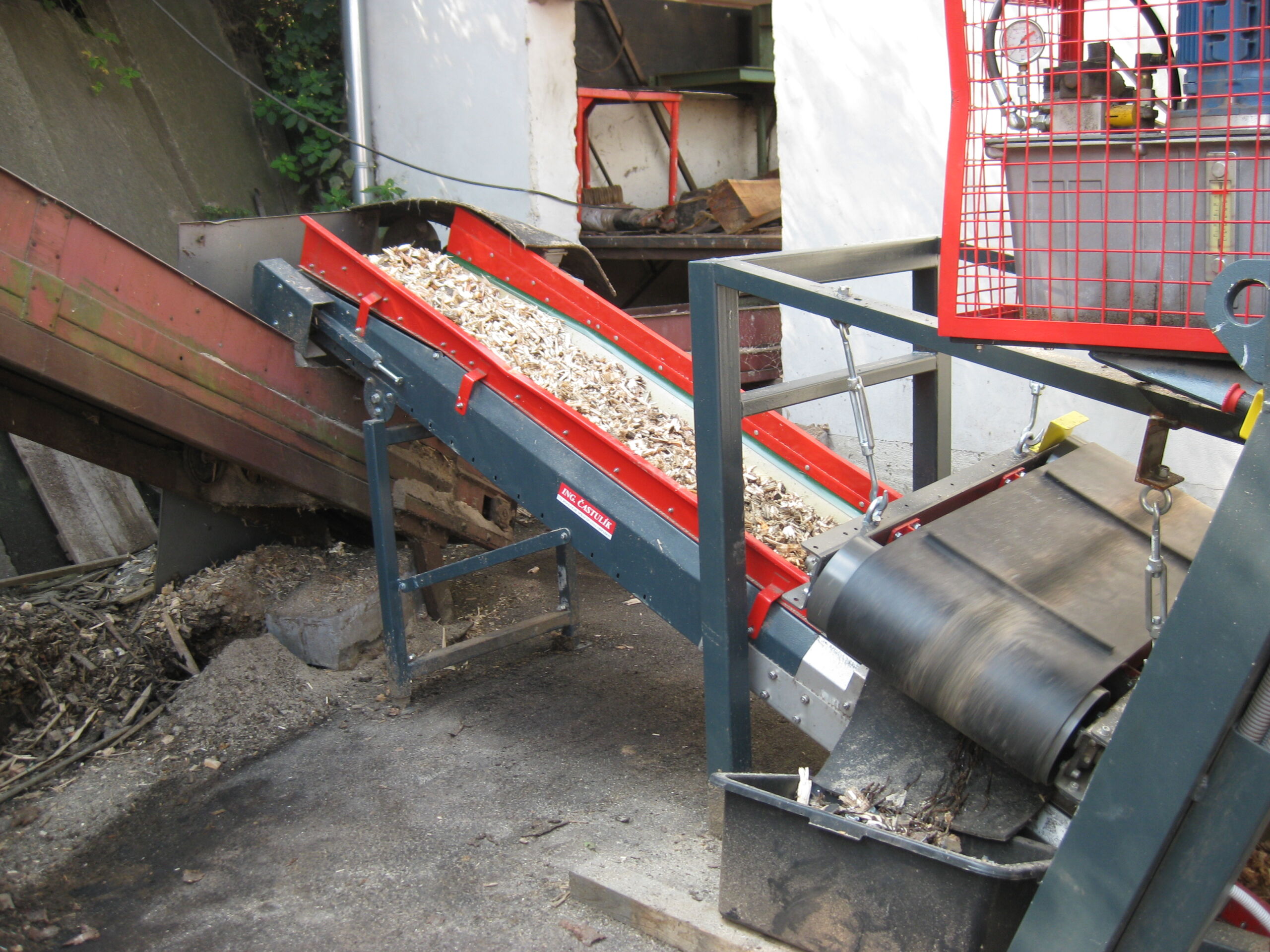
magnetic separation
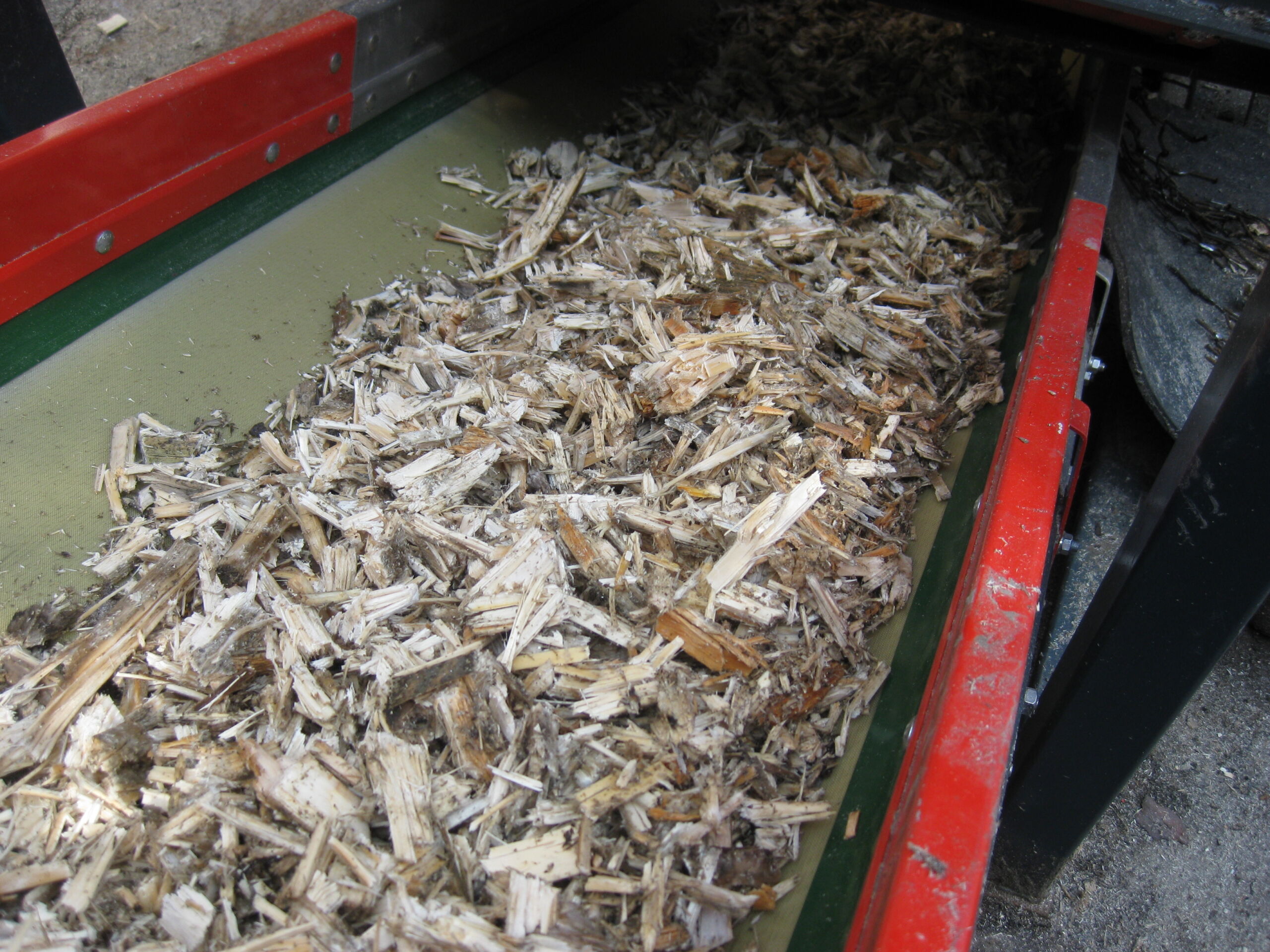
output particle size: <50 mm
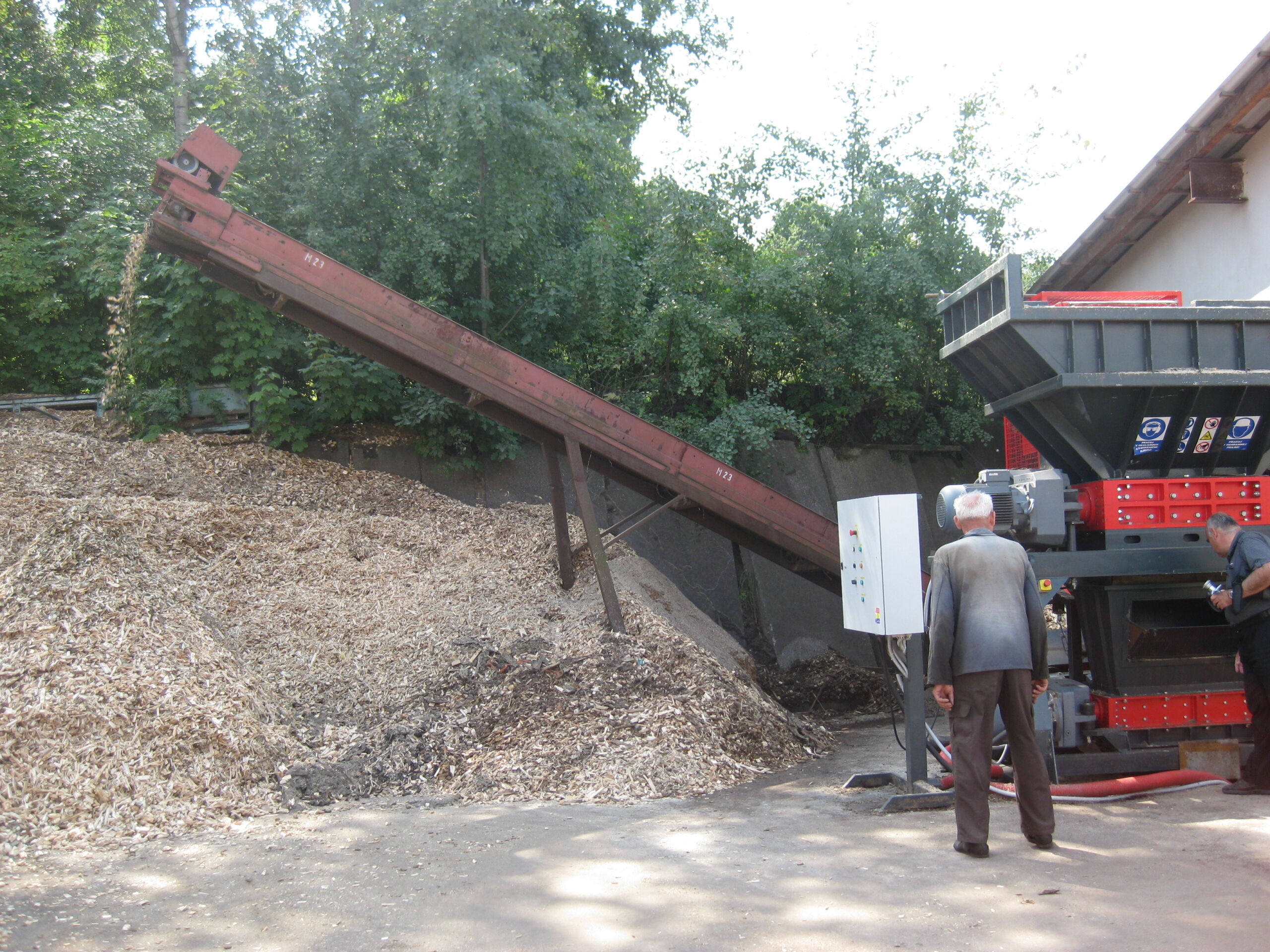
throughput: 4 tonnes per hour
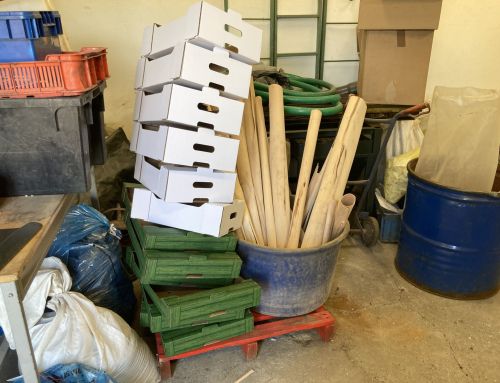
Wood waste from pallet production
Wooden pallet manufacturing generates a variety of wood waste, including timber offcuts, defective wooden components, damaged pallet parts and pieces of wood of various sizes.
From a shredding perspective, the key considerations include:
- varying dimensions of the input material,
- different orientations of individual pieces,
- uneven feeding,
- the required output particle size,
- the possible presence of metal contaminants.
When processing larger volumes of wood, the shredder must also allow for straightforward mechanical loading.
Four-shaft shredder ARIES 240/900
For this application, the ARIES 240/900 two-stage, four-shaft shredder with an installed power of 74 kW was used.
When processing this type of wood waste, the machine achieves a throughput of approximately 4 tonnes per hour, producing an output fraction below 50 mm.
The two-stage shredding principle makes it possible to process bulky pieces of wood waste while simultaneously controlling the size of the output material.
Material is loaded into the shredder hopper using a forklift or wheeled front loader. This method of feeding is well suited to facilities generating larger volumes of wood waste, where manual loading would be inefficient.
Wood output fraction below 50 mm
One of the key parameters considered when designing the shredding system was the required output particle size.
The ARIES 240/900 produces shredded wood with a particle size below 50 mm.
Depending on the requirements of the end user or downstream process, the resulting material can then be used for a variety of purposes. At this facility, the shredded wood is used:
- in horticulture,
- for heat generation,
- as a raw material for manufacturers of wood-based panels.
Shredding transforms bulky wood waste into a form that is considerably easier to handle, transport and process further.
Magnetic separation of metal contaminants
The shredder is followed by a discharge belt conveyor fitted with an overband magnetic separator.
Its purpose is to remove ferromagnetic contaminants from the shredded wood.
Magnetic separation is particularly important when processing materials where the presence of metal components cannot be completely ruled out. Removing these metals reduces contamination in the final wood fraction and prepares the material for further use.
Shredding wood directly at the point of waste generation
The entire processing system is installed directly at the production facility.
Wood waste generated during pallet manufacturing is collected, mechanically loaded into the shredder and processed to a fraction below 50 mm. The shredded material is then conveyed through the system and subjected to magnetic separation.
The resulting shredded wood can be loaded directly at the facility. The company also transports the material using its own 93 PRM capacity vehicle.
This arrangement allows wood waste to be processed directly where it is generated and prepared in a defined form for subsequent use.
How to select a shredder for wooden pallets and wood waste
When designing a shredding system, knowing the hourly volume of material alone is not enough.
Selecting the right shredder requires an assessment of:
the type of wood and nature of the waste, the maximum dimensions of the input pieces, the required hourly throughput, the method of feeding, the required output particle size, the presence of metal contaminants.
These parameters determine the appropriate shredding principle, shredding chamber dimensions, drive power and configuration of the downstream equipment.
At CASTULIK, we therefore design each shredding solution around the specific material and its processing conditions. Application testing allows us to assess how the material behaves during shredding and determine the achievable output particle size before developing the final technical solution.