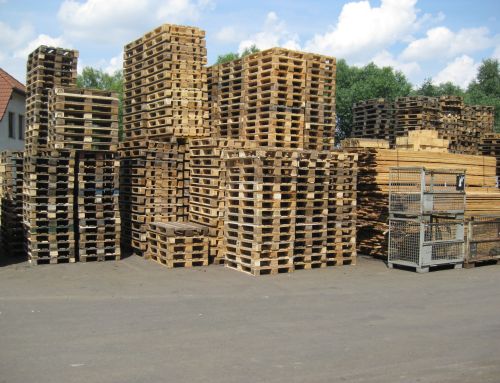
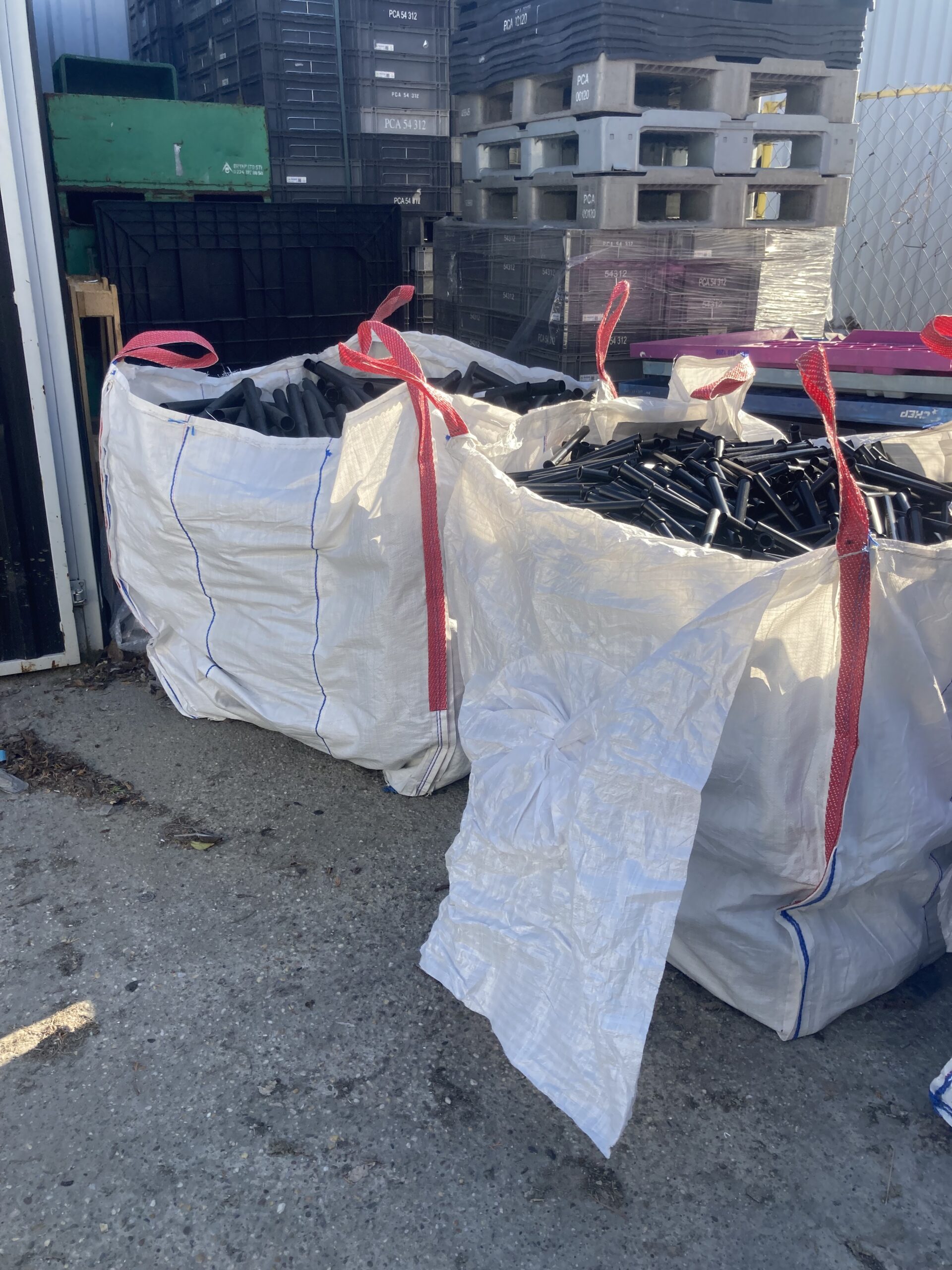
production waste requires a significant storage space

component composition of the rejected product
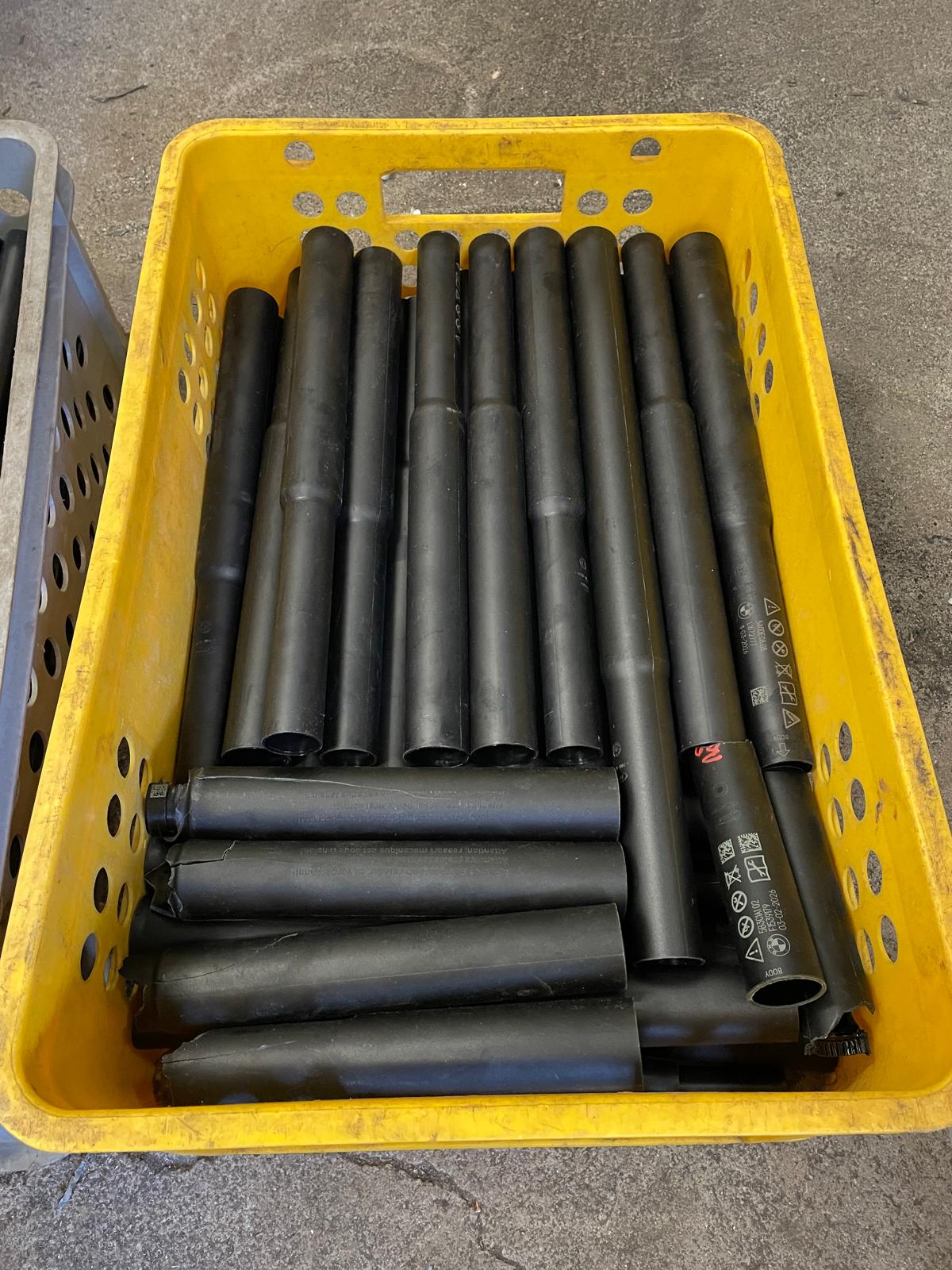
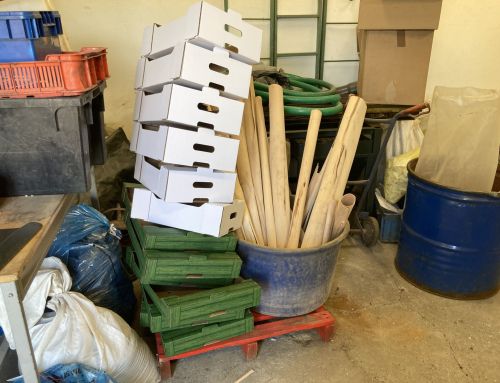
material before mechanical processing
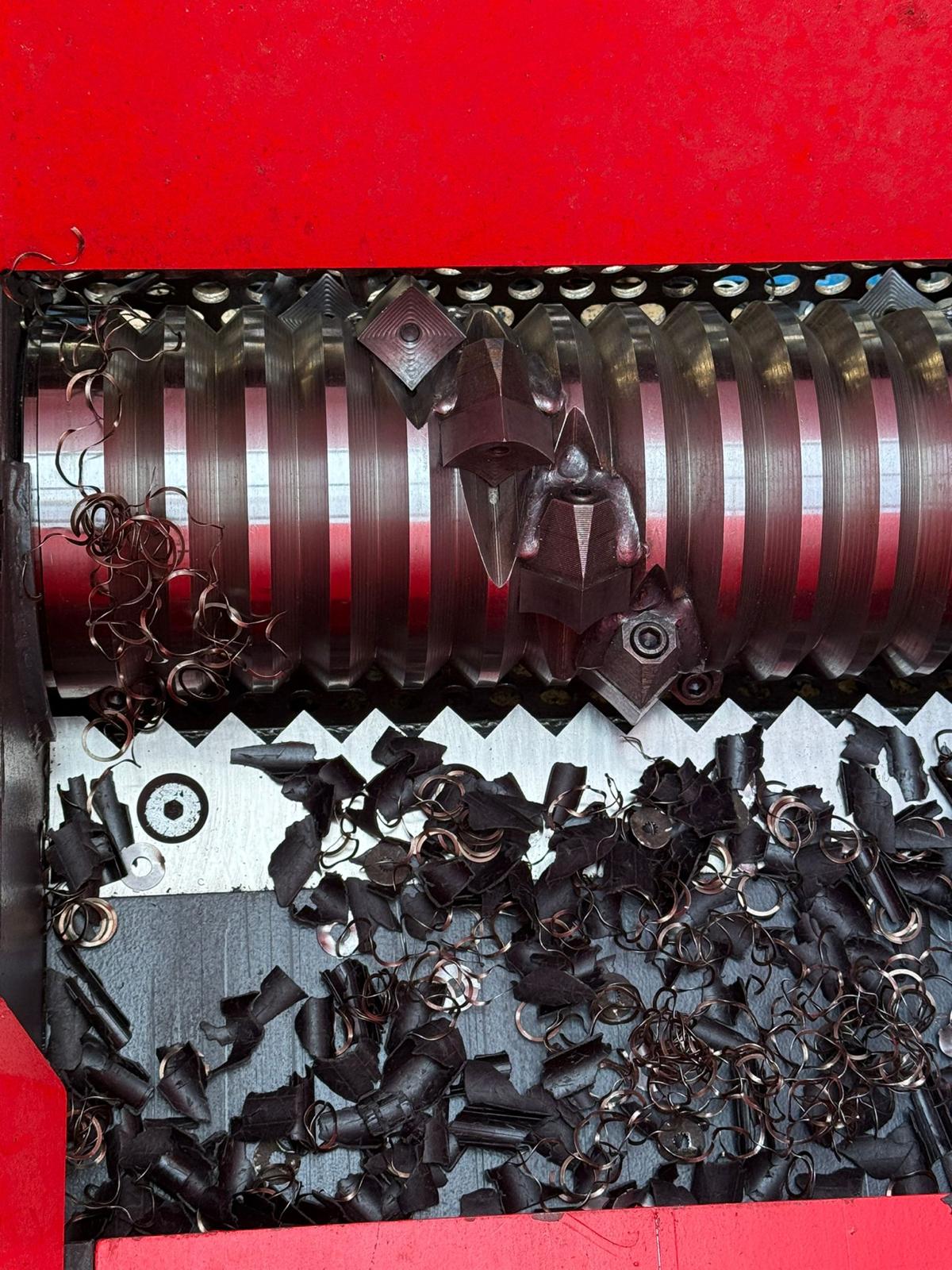
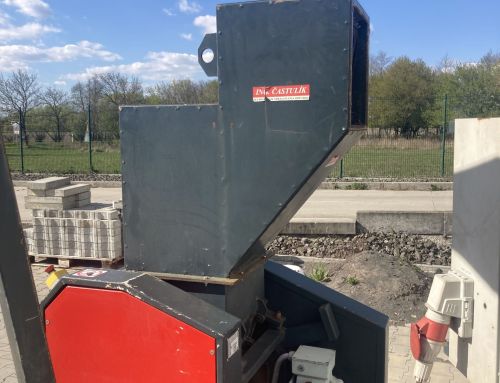
view inside the shredding chamber during the trial
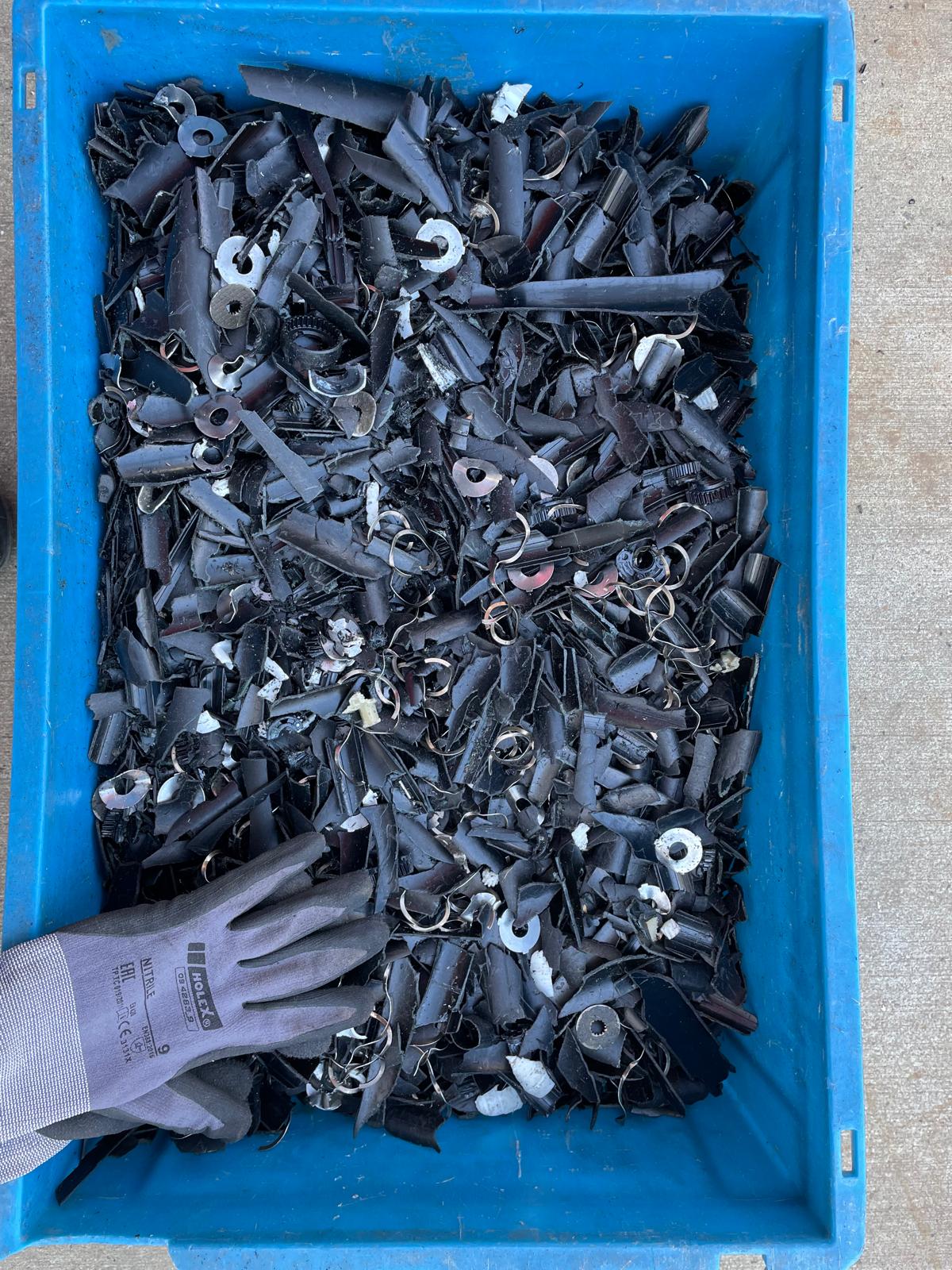
output fraction prepared for magnetic separation
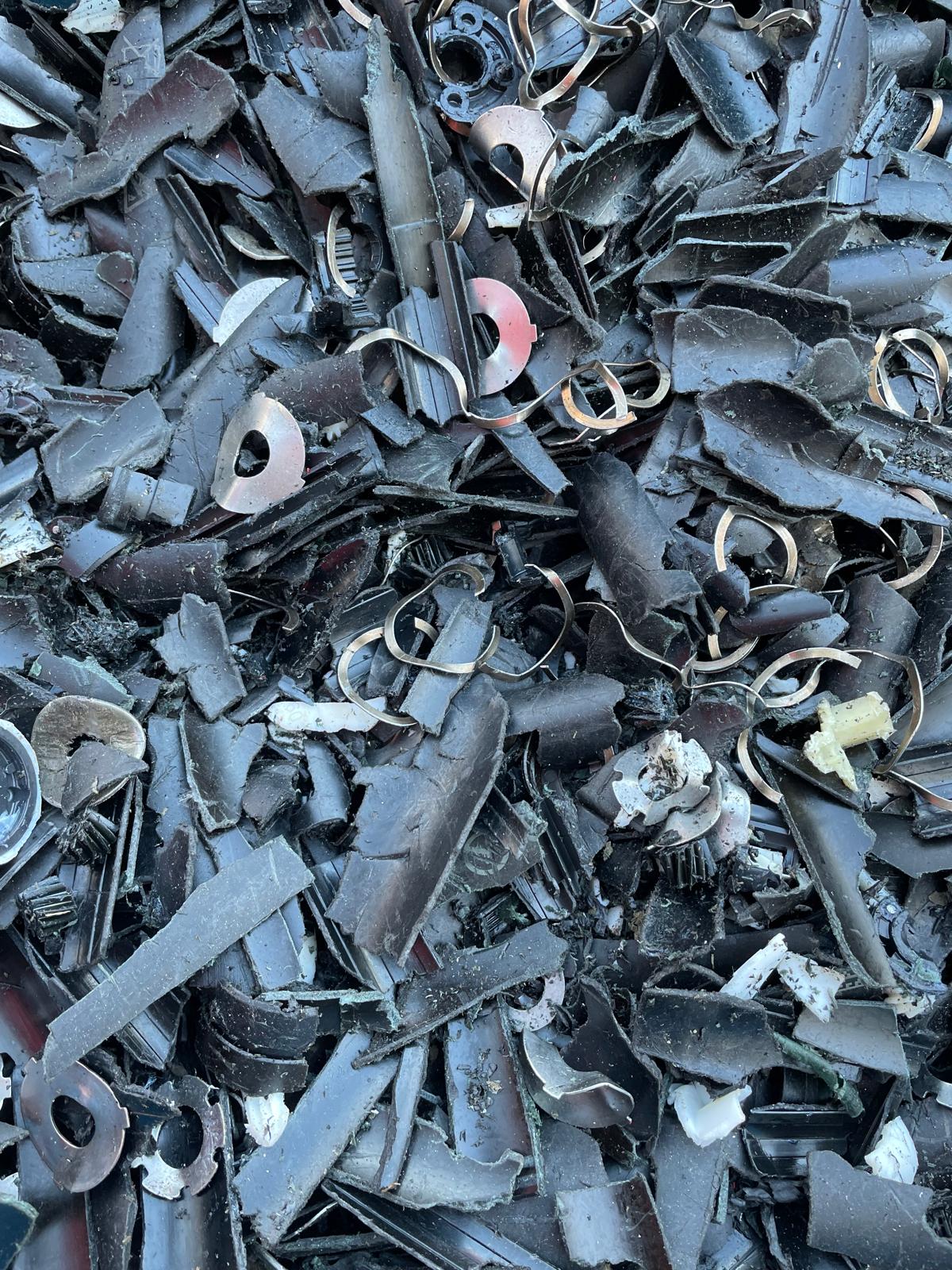
close-up of the plastic and metal mixture
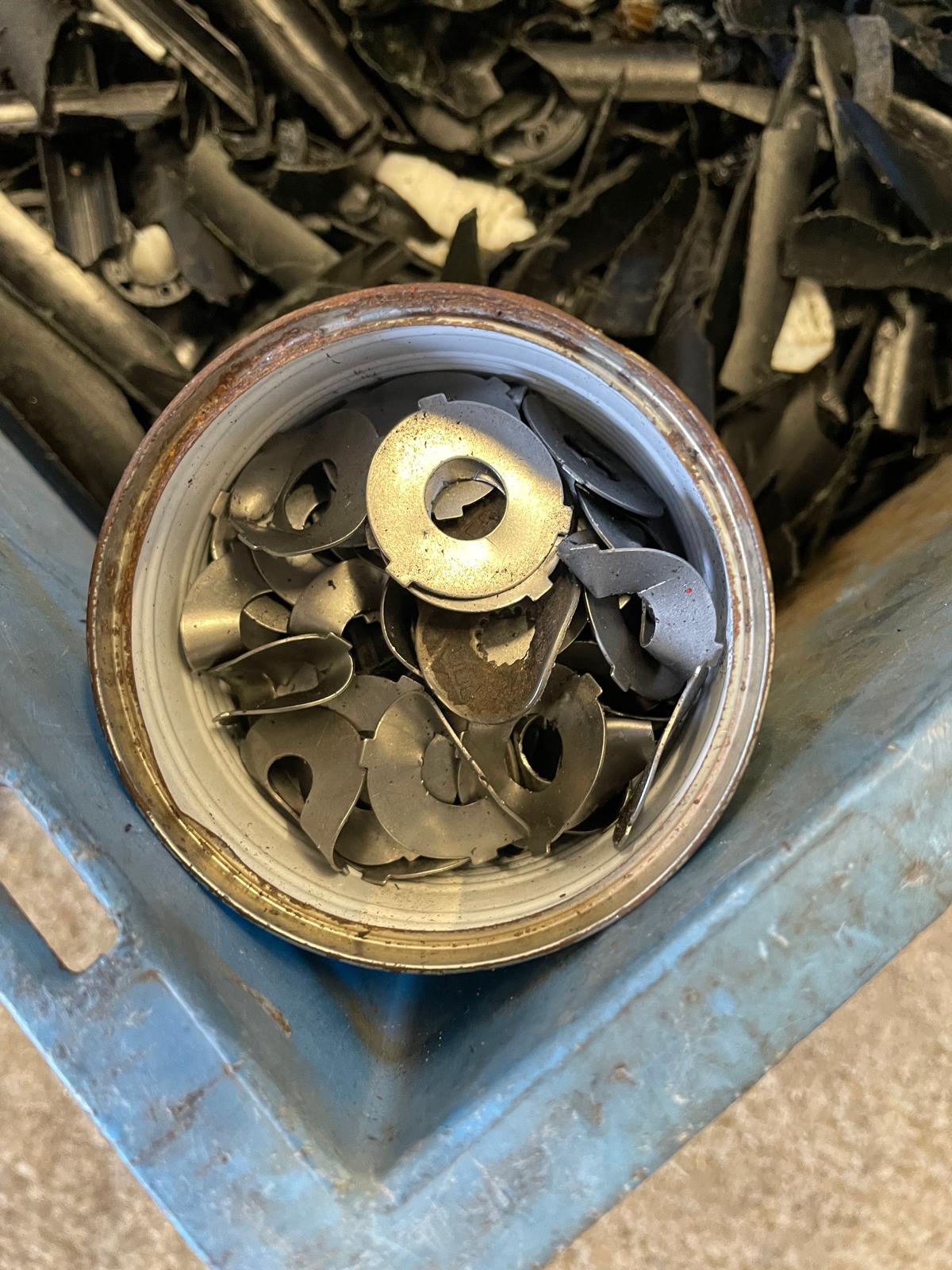
non-magnetic metal components
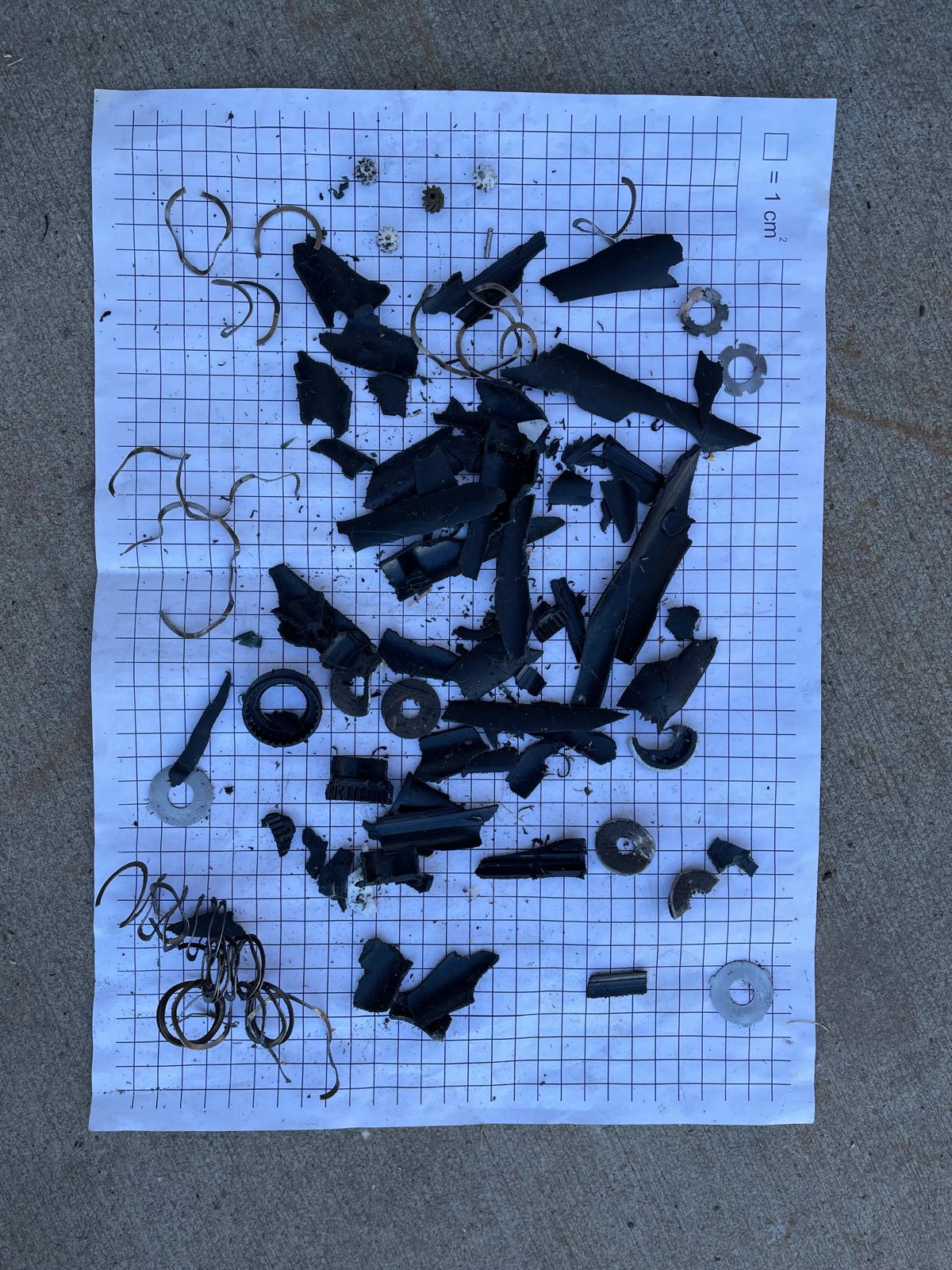
particle size distribution of the shredded material
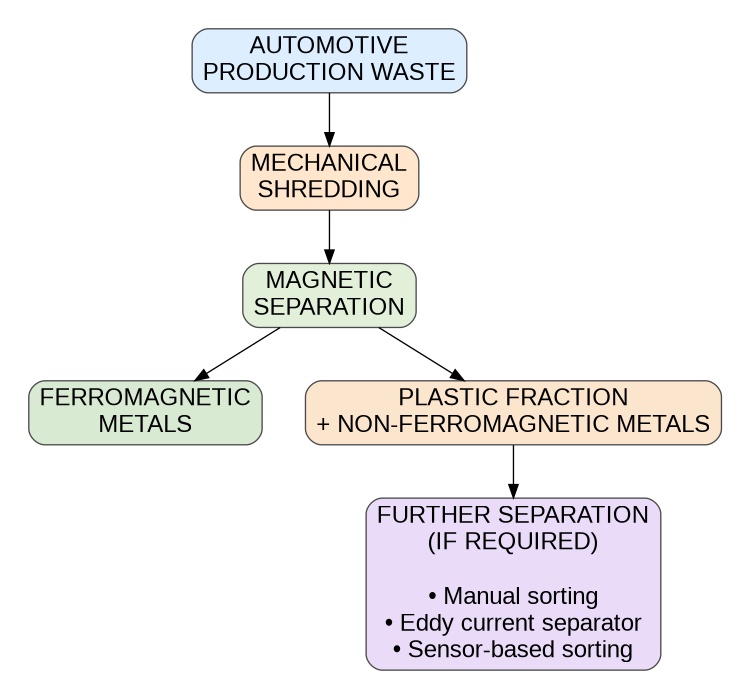
recommended process flow
An automotive component manufacturer generated approximately 25 tonnes of production waste per year. The waste consisted of plastic components containing steel inserts, metal end fittings, springs, and other metal parts.
The primary objective was to reduce the volume of the waste and prepare it for efficient material recycling. The process needed to ensure:
- significant reduction in waste volume,
- release of metal parts from the plastic components,
- production of a plastic fraction suitable for further recycling,
- reliable separation of ferromagnetic metals using magnetic separation.
At the same time, the technology had to minimise the need for manual sorting.
Input material
The tested material consisted of mixed production waste generated during the manufacture of telescopic mechanisms used in the automotive industry.
The waste stream consisted primarily of:
- polyamide tubes,
- plastic-metal end fittings,
- small plastic components,
- steel components,
- springs,
- and smaller quantities of other metal parts
The largest proportion of the material consisted of polyamide tubes approximately 300 mm long and 30 mm in diameter. The waste also contained metal contaminants intended for subsequent separation.
Technological challenge
At first glance, this appeared to be a typical production waste stream. In reality, however, the material consisted of several components with very different mechanical properties.
The main technical challenges included:
- steel inserts firmly embedded within plastic components,
- plastic-metal end fittings with mechanically joined materials,
- springs that could deform during shredding and complicate downstream handling,
- non-magnetic metal components that cannot be removed using conventional magnetic separator,
- achieving sufficient fragmentation of the plastic components without generating excessive fines.
The objective was therefore not simply to reduce the material size, but primarily to liberate the individual metal components so they could be efficiently separated during subsequent processing.
Process analysis
The purpose of the process analysis was to determine whether mechanical size reduction could simultaneously reduce the material size and liberate the embedded metal inserts.
The analysis focused on answering the following questions:
- Would the plastic components be sufficiently broken apart?
- Would the metal inserts be released during shredding?
- Would the springs create any processing issues?
- Would the resulting material be suitable for magnetic separation?
- Would the plastic fraction be suitable for further material recycling?
The objective of the analysis was therefore not to evaluate machine throughput, but to understand the behaviour of the individual components during mechanical processing.
Shredding trials
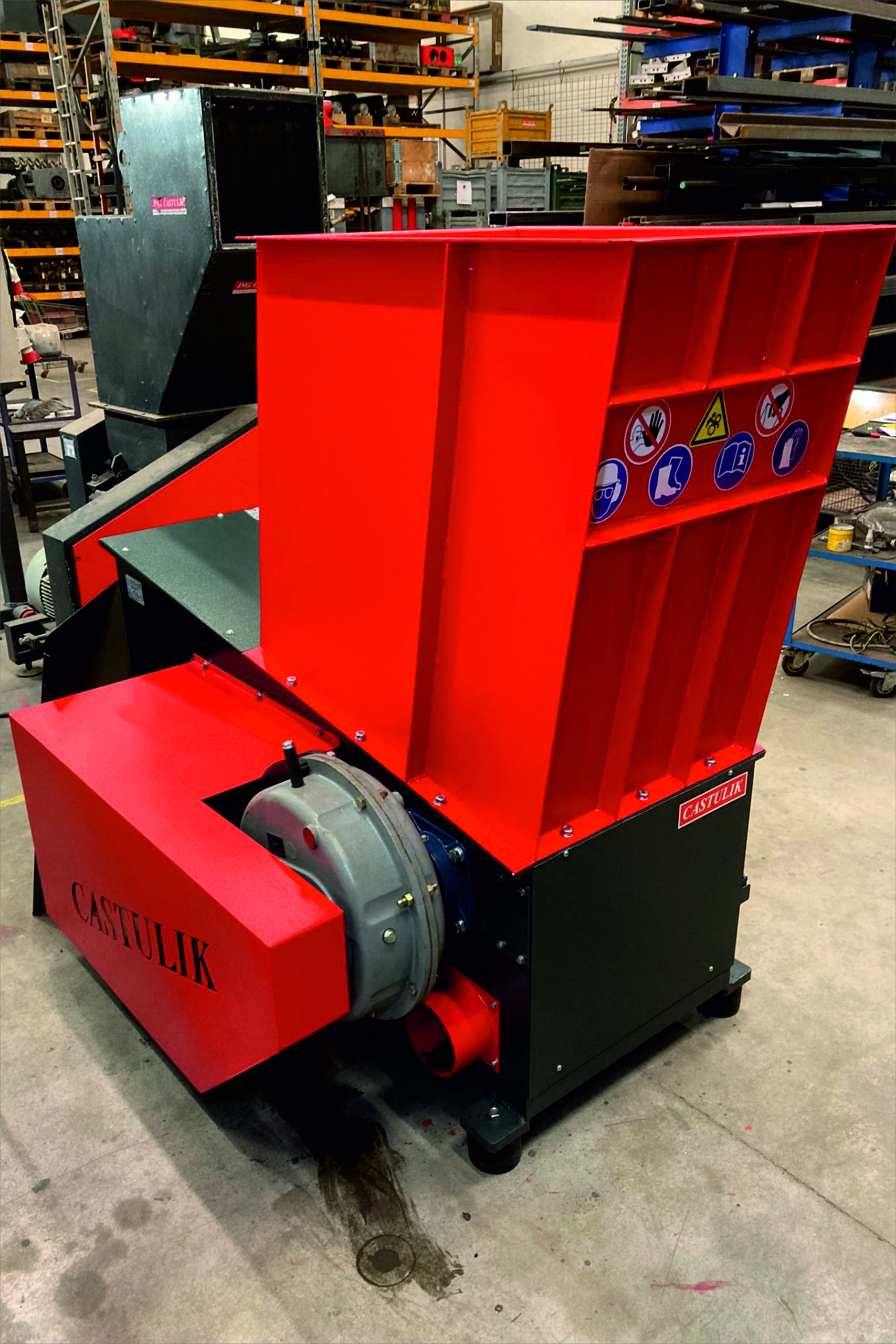
The material was processed using a CASTULIK PICUS single-shaft shredder fitted with a 20 mm screen.
During the trials, particular attention was paid to:
- material feeding stability,
- shredding performance,
- fragmentation of the plastic components,
- liberation of the metal inserts,
- behaviour of the springs,
- suitability of the output material for subsequent magnetic separation.
Machine throughput was not evaluated during the trials. The material was fed gradually to allow detailed observation of the behaviour of each individual component.
Technical observations
Fragmentation of the polyamide tubes
The polyamide tubes were consistently reduced to the required particle size without any significant operational issues.
Liberation of the metal inserts
Most of the steel inserts were naturally released from the plastic components during mechanical processing.
This proved to be the key prerequisite for successful magnetic separation.
Behaviour of the springs
The springs separated from the plastic components during shredding. However, some remained elongated after processing.
Their shape may influence downstream screening or material conveying and should therefore be considered when designing the complete processing system.
Non-magnetic stainless steel
The analysis revealed that one of the components was manufactured from non-magnetic stainless steel.
As a result, this component cannot be recovered using magnetic separation.
Where maximum plastic purity is required, an additional separation stage should be considered, such as:
- an eddy current separator,
- optical sorting,
- manual quality control.
Volume reduction
Mechanical shredding significantly reduced the material volume, simplifying both handling and downstream logistics.
Results
The process analysis confirmed the technical suitability of the proposed processing method.
The trials demonstrated:
- reliable shredding of the polyamide tubes,
- fragmentation of the plastic end fittings,
- liberation of the majority of the steel inserts,
- significant volume reduction,
- production of a material suitable for magnetic separation.
The ferromagnetic components were successfully recovered using magnetic separation.
The only limitation was the presence of non-magnetic stainless steel components, which require an additional separation step.
Recommended technological process
Based on the trial results, the following processing sequence is recommended:
- Mechanical shredding of the mixed production waste.
- Magnetic separation of the liberated ferromagnetic components.
- Collection of the plastic fraction for further material recycling.
- Where a higher purity plastic fraction is required, the process can be supplemented with:
- an eddy current separator,
- optical sorting,
- or manual removal of the remaining non-magnetic metal components.
This process significantly reduces the volume of stored waste, automates the recovery of ferromagnetic components and improves the quality of the plastic fraction intended for recycling.
Technical conclusion
The trials confirmed that mechanical shredding is an effective first step in processing this type of automotive production waste.
During shredding, the plastic components were effectively fragmented, releasing the majority of the embedded steel inserts and enabling their automatic separation by a magnetic separator.
At the same time, the process significantly reduced the material volume and prepared the plastic fraction for further material recycling.
The main limitation is the presence of non-magnetic metal components, which cannot be separated using a magnetic separator. Where maximum purity of the plastic fraction or complete recovery of all metal components is required, the process should be complemented by an additional separation stage.