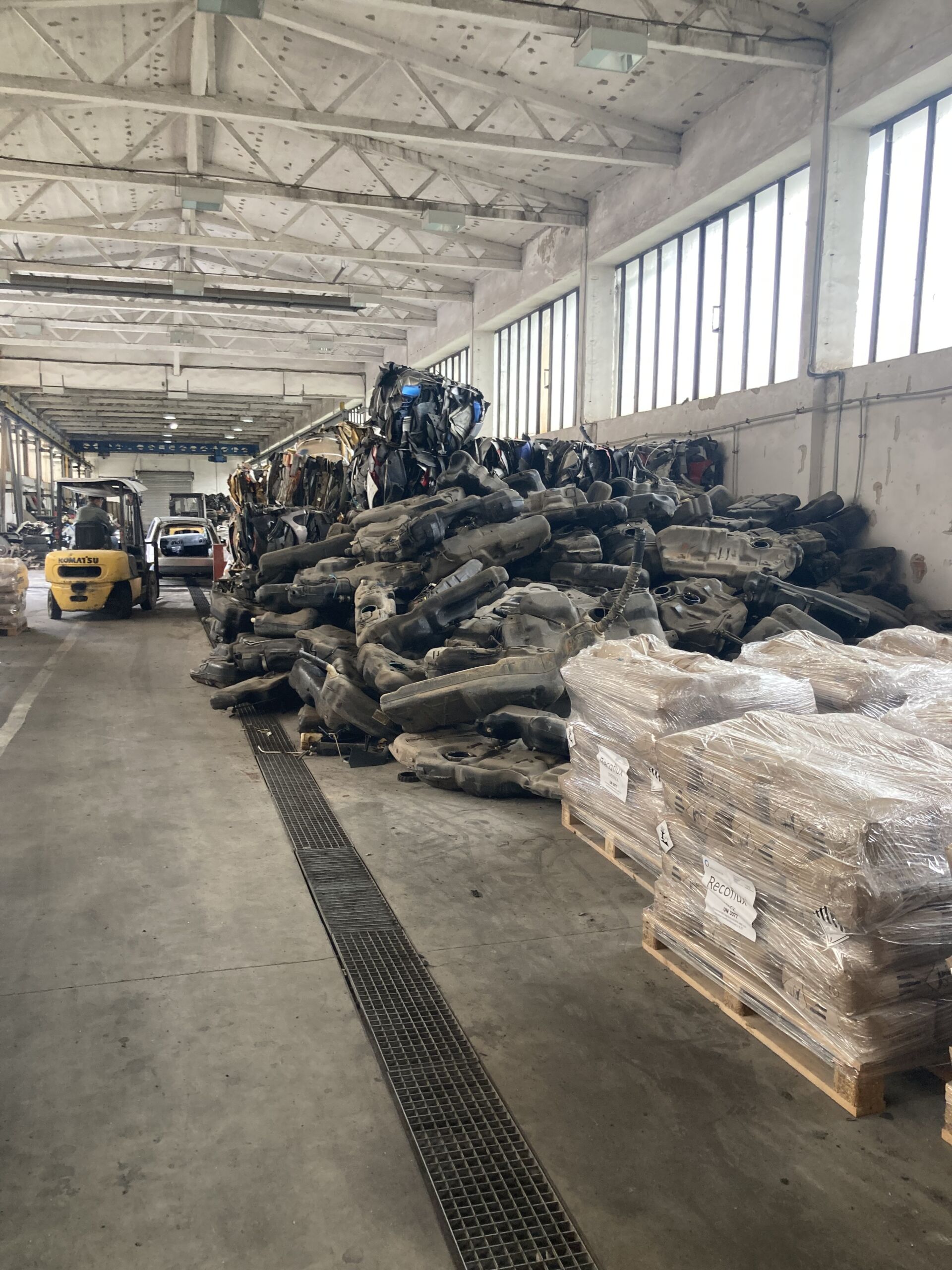
View inside the vehicle dismantling facility.
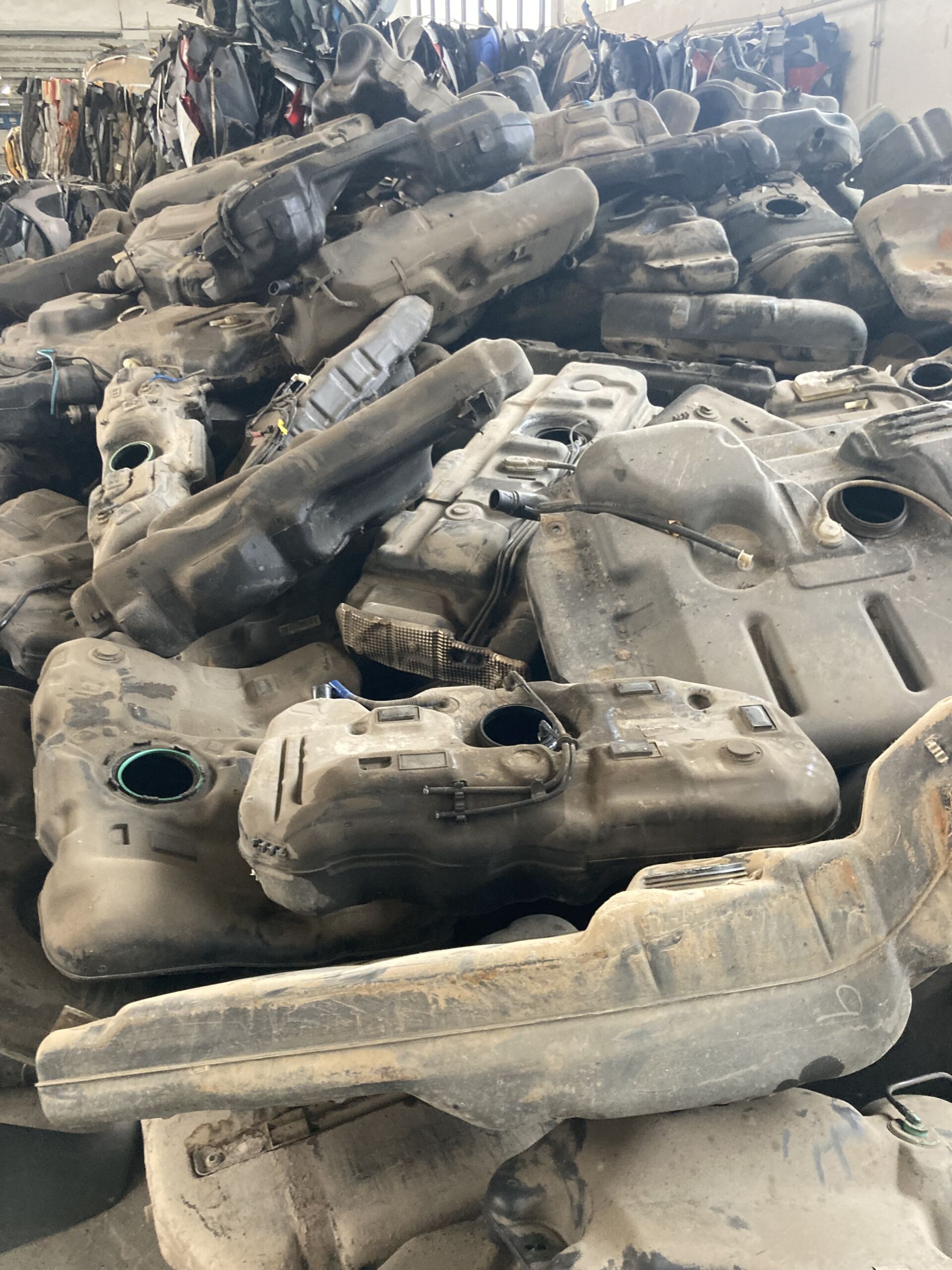
A pile of air (plastic fuel tanks)

Application test – 0 seconds

Application test – 3 seconds
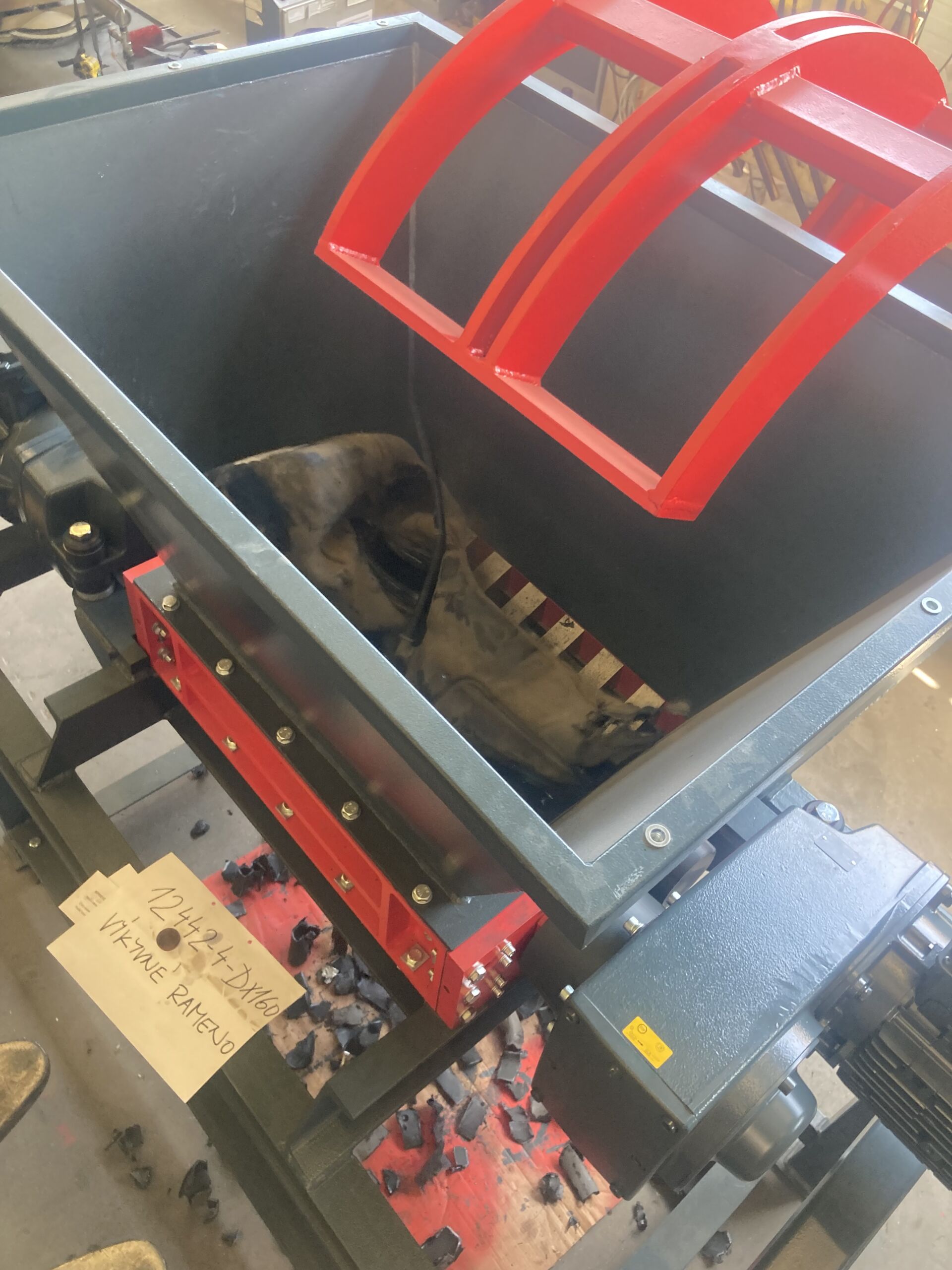
Application test – 7 seconds
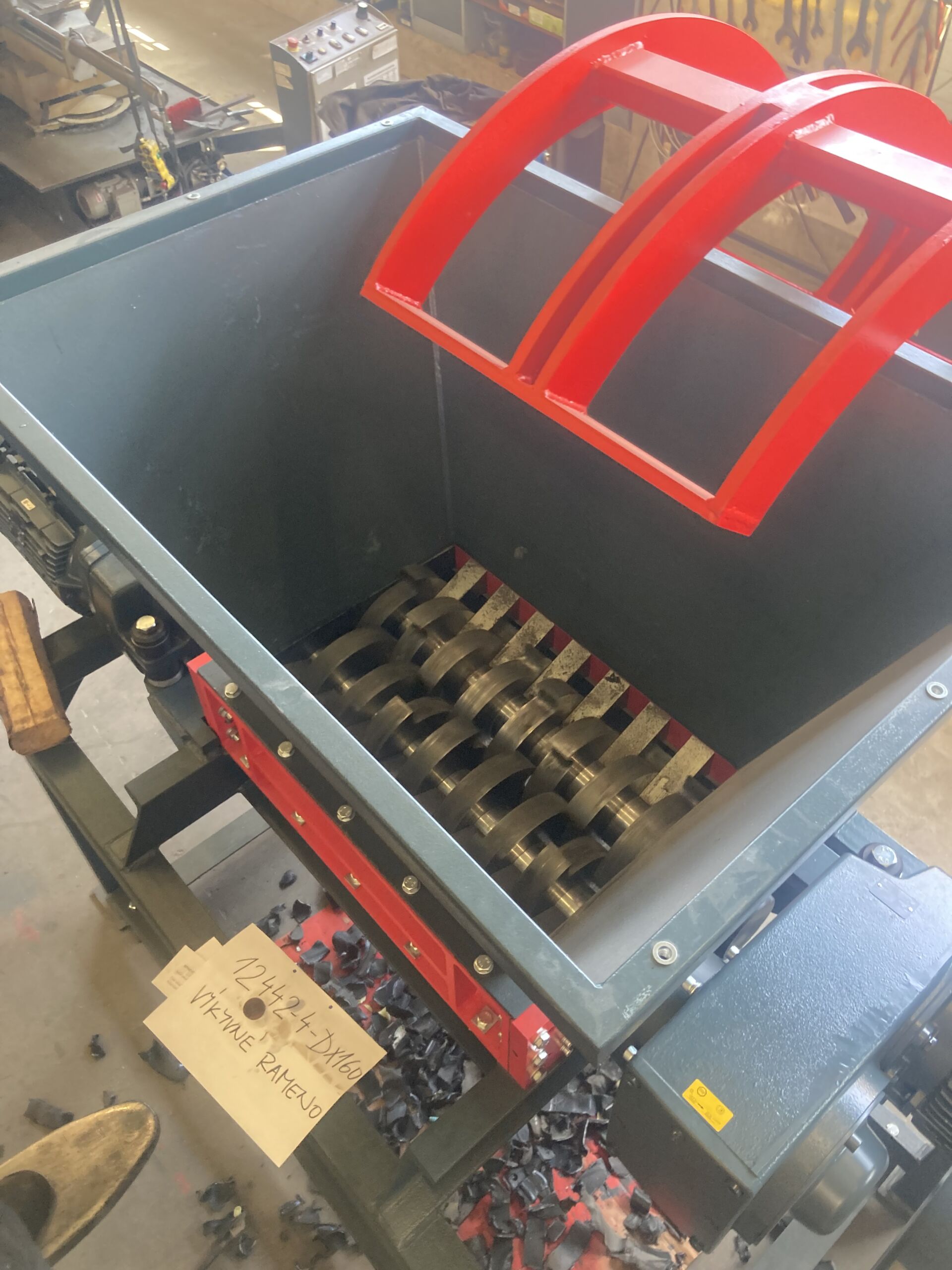
Application test – 10 seconds
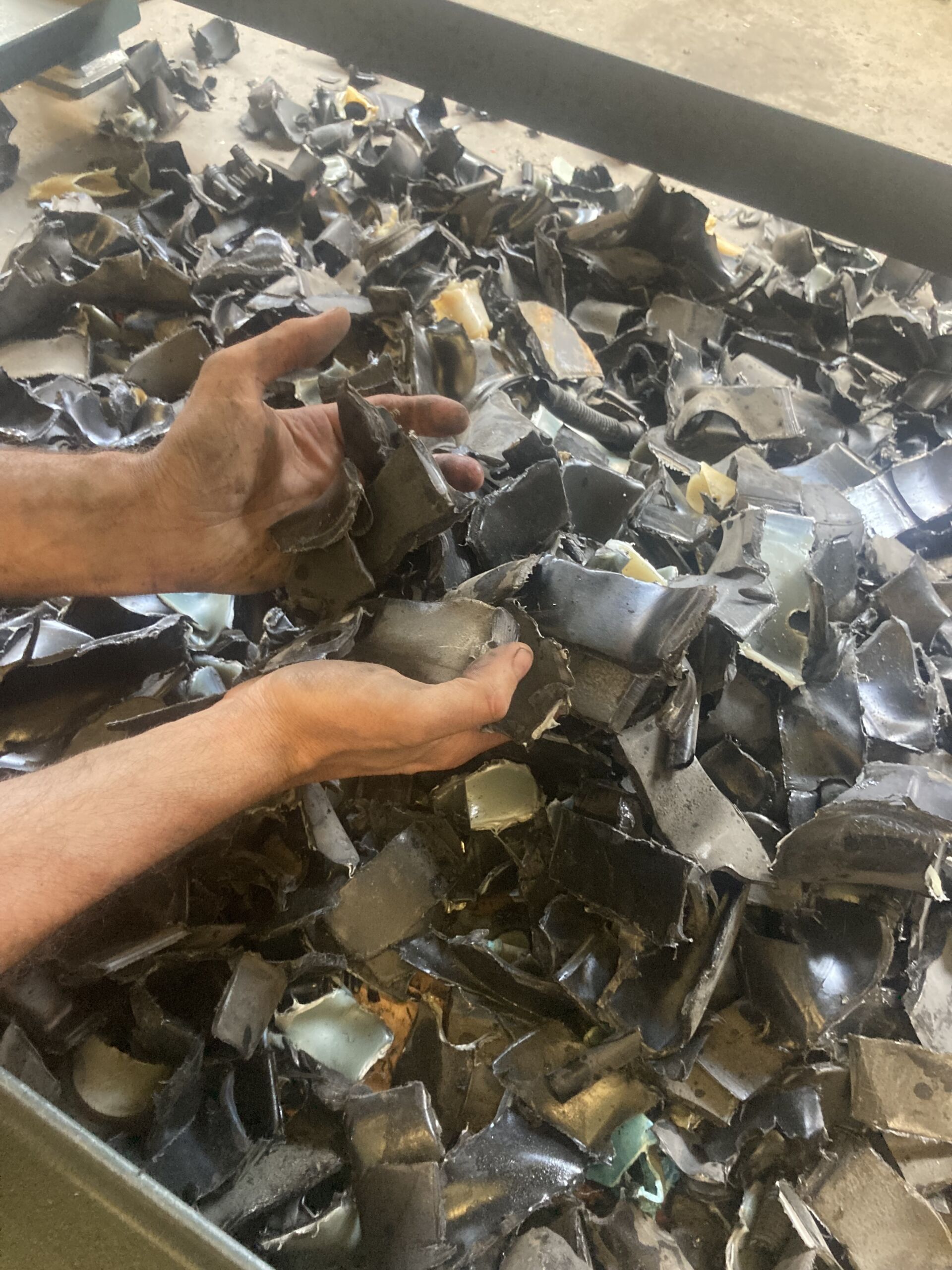
Shredding result – 5:1 volume reduction
Modern passenger cars contain a surprisingly large amount of plastic. Although drivers may rarely give these materials much thought, plastic components now account for approximately 10-20% of a vehicle’s total weight. For a car weighing 1,500 kg, this represents around 150-300 kg of plastic materials.
In terms of volume, the proportion is even more significant. It is estimated that plastic parts account for approximately half the volume of all vehicle components, despite representing a relatively small proportion of the vehicle’s overall weight.
What types of plastic are used in cars?
Vehicle manufacturers use a wide range of plastic materials depending on requirements such as strength, durability and weight.
The most common include:
- Polypropylene (PP) – bumpers, door panels
- ABS – dashboards, covers and housings
- Polyamide (PA) – technical components in the engine compartment
- Polyethylene (PE) – tanks and fluid reservoirs
- Polyurethane (PUR) – seats and padding
- PVC – wiring harnesses and interior components
Recycling automotive plastics is not straightforward
The main challenge is not the quantity of plastic itself, but its diversity.
End-of-life vehicles contain hundreds of different plastic components. These are often combined with metal reinforcements, screws, inserts and other materials. Identifying the individual types of plastic and subsequently recovering them for material recycling is therefore both technologically challenging and economically demanding.
As a result, a significant proportion of plastic components from end-of-life vehicles is still used as alternative fuel in the cement industry rather than being recycled back into materials.
Some components, such as bumpers and fuel tanks, can be successfully recycled. However, these materials often need to be transported to specialist recycling facilities located hundreds of kilometres from the vehicle’s initial processing site.
Shredding as a way to reduce logistics costs
When transporting plastic waste, material volume plays a significant role.
Coarse shredding of plastic components can substantially reduce their volume and increase their bulk density. This allows transport capacity to be used more efficiently and reduces logistics costs. In many cases, transport costs can be a deciding factor in whether a material is recycled or ultimately sent for energy recovery.
For vehicle dismantlers, shredding therefore becomes not only a processing operation, but also an economic one.
Application test: plastic fuel tank
During CASTULIK application trials, one of the more challenging plastic components found in a vehicle was tested – a plastic fuel tank.
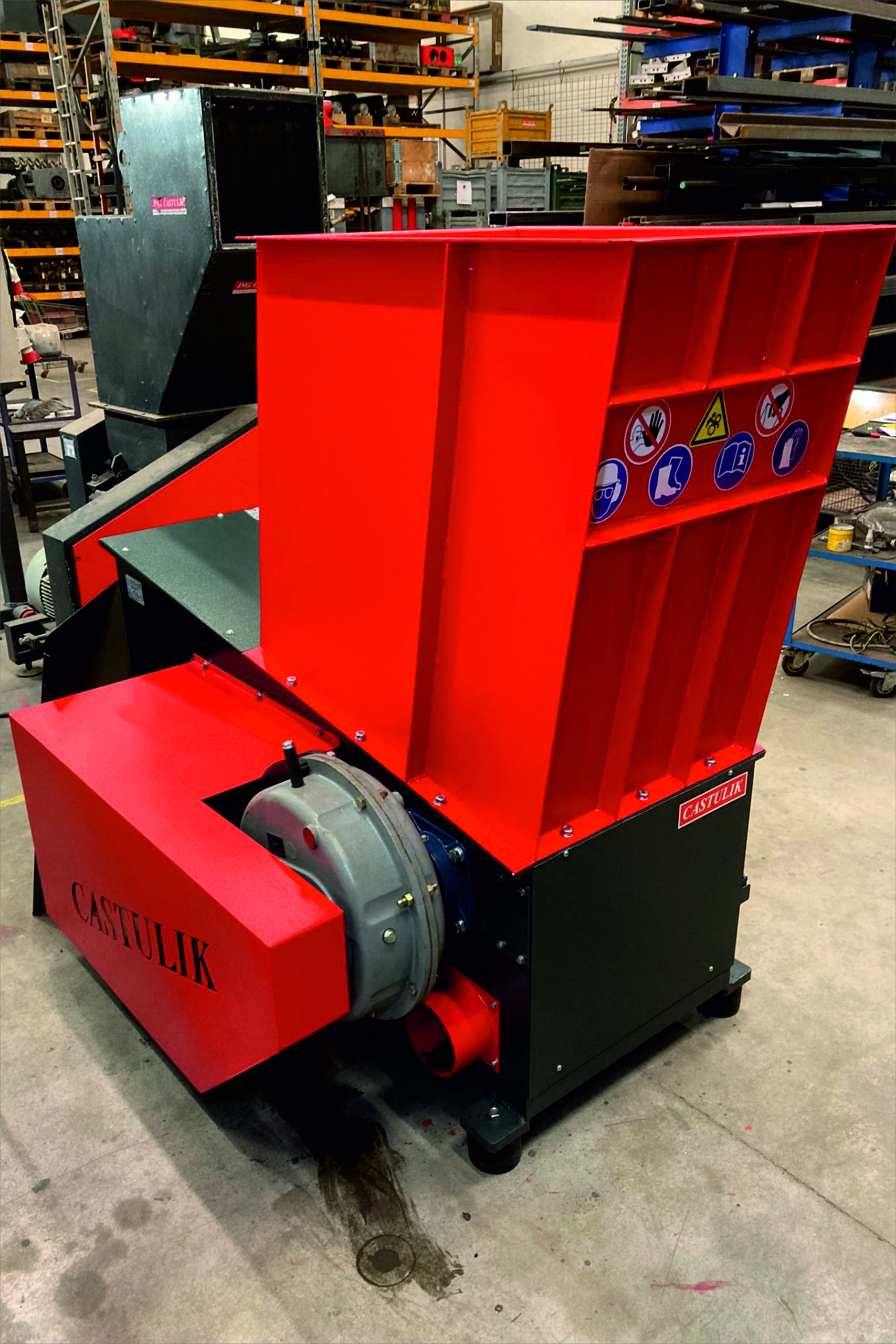
The trial demonstrated that a DX160/600 twin-shaft shredder with an installed power of 16.7 kW can successfully process this type of waste. The result indicates that the machine is also suitable for processing many other common plastic components from passenger vehicles.
For many vehicle dismantlers and end-of-life vehicle processing facilities, this can provide an economically attractive solution for reducing waste volume before the material is transported for further processing or recycling.
Conclusion
When dealing with automotive waste, the material itself is often not the biggest challenge – its volume is. This is why material pre-processing through shredding is playing an increasingly important role in both recycling and logistics.
After all, the most expensive waste to transport is often the waste where you are mostly transporting air.